0
Poly Furniture
The Hidden Math Behind Your Wood Furniture
By Scott
May 6, 2026
Share:
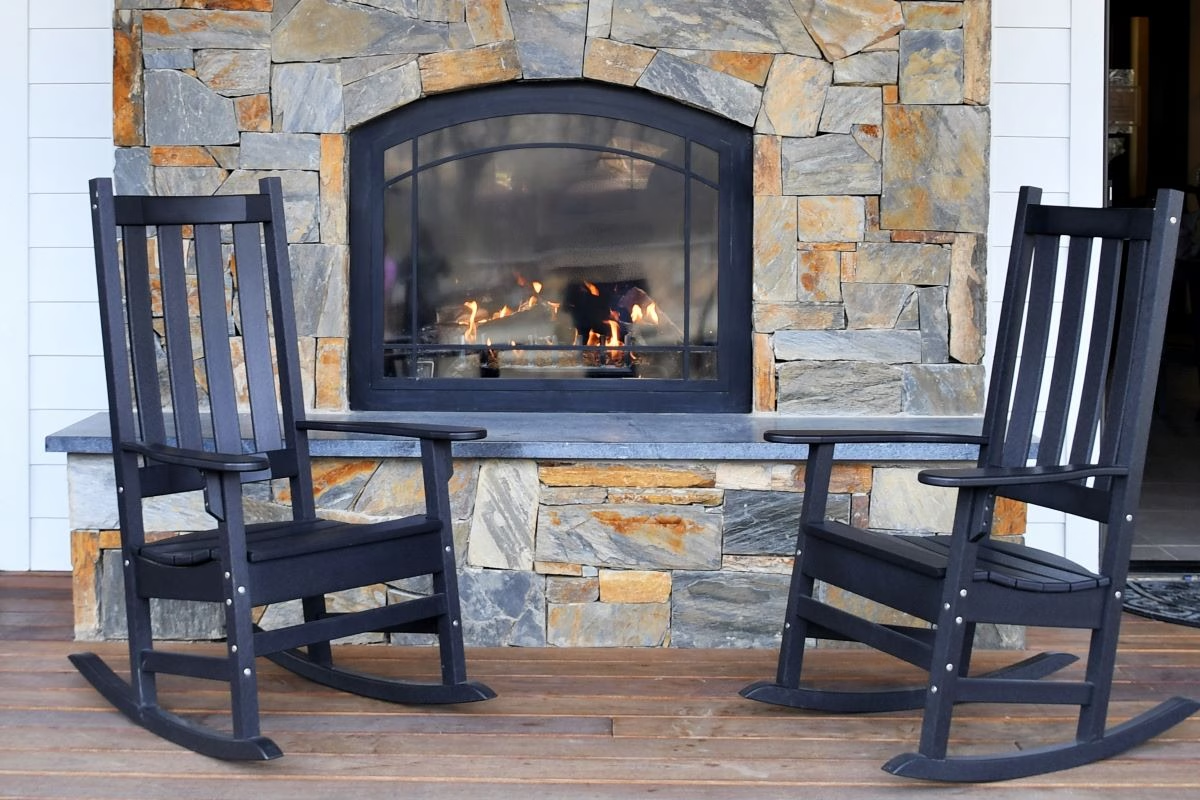
You bought that beautiful cedar patio set three years ago. You remember feeling good about the price. Six hundred dollars for a table and four chairs seemed reasonable compared to the twelve hundred dollars a poly set would have cost. You saved money. Or so it seemed.
Three years later, you have already restained it twice, replaced two chairs that developed cracks near the joints, and you’re eyeing a third round of sealant this spring. Add it up, and that “budget-friendly” cedar set has quietly cost you more than the poly set ever would have, and it still has years of upkeep ahead of it.
This is the hidden math most homeowners never run before buying outdoor furniture: the sticker price is only the first number. The real cost shows up over the next five, ten, or fifteen years, and it rarely favors wood.
The Real Cost Problem With Wood Furniture
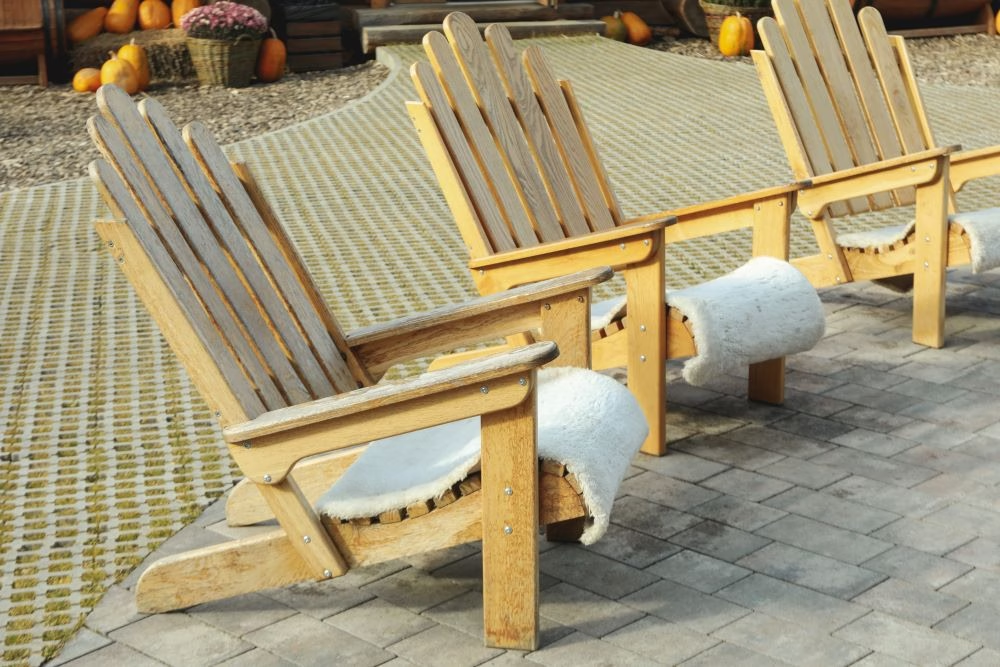
Wood furniture pricing looks simple at the point of sale. What it doesn’t show you is the maintenance bill that starts almost immediately after you get it home.
Untreated or lightly treated wood begins absorbing moisture from day one. Depending on the wood type and your climate, that moisture leads to swelling, warping, and eventually cracking at the joints, which are the weakest structural points on any piece of furniture. To slow this down, wood furniture needs regular staining or sealing, typically every one to two years for softer woods like cedar and pine, and every two to three years even for denser woods like teak.
Each round of maintenance has a real cost, whether you’re paying for materials and your own time or hiring it out. And that’s before accounting for the furniture that simply wears out early and needs to be replaced altogether.
Breaking Down the Hidden Costs of Wood Ownership
Here’s what the true cost of a wood patio set typically looks like over a decade, using a mid-range cedar dining set (table and four chairs) as an example:
- Initial purchase: $600
- Staining/sealing supplies and labor, roughly every 18 months: $80–$150 per round, six to seven rounds over 10 years = $560–$1,050
- Replacement of individual pieces due to cracking, rot, or joint failure: $150–$300 per chair, commonly needed at least once within a decade
- Full replacement, since most cedar sets show significant structural wear within 8–10 years: often needed before the decade is out
When you total the purchase price, the recurring maintenance, and the likely partial or full replacement, a $600 cedar set frequently costs $1,300 to $1,800 or more over ten years, once time and materials are factored in. That’s before considering the time spent sanding, staining, and hauling furniture in and out of storage each season.
What the Poly Alternative Actually Costs Over Time
A comparable poly dining set at $1,200 upfront looks more expensive on day one. Run the same ten-year math, and the picture changes.
Poly furniture made from high-density polyethylene, or HDPE, does not absorb moisture, so it does not need staining, sealing, or painting at any point in its life. Routine care is limited to occasional cleaning with mild soap and water, which costs nothing beyond a few minutes of your time. Quality poly furniture is built to last 25 years or more, often backed by a manufacturer warranty, meaning a single purchase can realistically outlast two or three cycles of wood furniture.
Over that same ten-year window, a poly set typically costs close to its original $1,200 purchase price, with no meaningful maintenance spend and no expected replacement. Compared to the $1,300 to $1,800 real cost of the cedar set, poly frequently comes out even or ahead well before the ten-year mark, and the gap only widens from there since the poly set still has 15 or more years of life left while the wood set is likely being replaced again.
Cost Comparison at a Glance
| Cost Factor | Cedar/Wood Furniture | Poly (HDPE) Furniture |
|---|---|---|
| Typical upfront cost (table + 4 chairs) | $600 | $1,200 |
| Maintenance over 10 years | $560–$1,050 (staining/sealing) | Near $0 (soap and water only) |
| Likely replacement within 10 years | Partial or full replacement common | Not typically needed |
| Estimated true 10-year cost | $1,300–$1,800+ | ~$1,200 |
| Expected lifespan | 8–10 years with upkeep | 25+ years |
Amish Craftsmanship Adds Value to the Equation
Part of what makes poly furniture hold up to this math is construction quality, not just the material itself. Amish craftsmen bring the same joinery and assembly standards they’ve long applied to wood furniture, now paired with HDPE poly lumber that doesn’t suffer from the moisture-related failure points wood does. The result is furniture that combines sturdy, traditional construction with a material built to avoid the maintenance cycle entirely, which is a meaningful part of why the long-term cost comparison favors poly so clearly.
Addressing the Objection: “Poly Costs More Upfront”
This is the most common hesitation, and it’s a fair one to raise. Poly furniture does typically cost more at the register than a comparable wood set. But sticker price only tells you what you’re paying today, not what you’ll pay over the life of the furniture.
The real question isn’t which set costs less to buy. It’s which set costs less to own. Once you factor in staining, sealing, repairs, and the near-certainty of replacing wood furniture within a decade, the higher upfront cost of poly is usually recovered within the first several years, and every year after that is where poly pulls ahead financially as well as practically.
Do the Math Before You Buy
The sticker price on outdoor furniture only tells part of the story. Before choosing based on the number at checkout, it’s worth running the ten-year math on maintenance, repairs, and replacement, since that’s where the real cost difference between wood and poly furniture shows up.
Shop the full poly furniture collection to see Amish-built, maintenance-free pieces designed to make this math work in your favor. To dig deeper into the durability side of this comparison, see our guide on why poly furniture outlasts traditional wood and our breakdown of poly furniture vs. teak durability.
Frequently Asked Questions
How does HDPE compare to aluminum for outdoor furniture?
HDPE and aluminum each offer distinct performance profiles. HDPE provides strong resistance to moisture, UV exposure and temperature variation, which supports its use across diverse climates. Aluminum is lightweight and resistant to corrosion but may present different aesthetic and thermal properties. Comfort and weight preferences, together with local climate considerations, should inform the material choice.
What environmental impact does HDPE furniture have?
HDPE furniture commonly incorporates recycled resin, which reduces landfill input and the demand for virgin raw materials. Production of HDPE furniture can require less energy than some traditional wood processing methods, and products avoid certain toxic wood treatments. These factors contribute to a lower environmental burden when compared with some conventional furniture options.
Can HDPE furniture withstand extreme weather conditions?
HDPE is engineered to resist moisture-related degradation, which mitigates warping and rotting seen in untreated wood. Properly formulated HDPE with UV stabilisers also resists solar-induced colour loss. These properties enable HDPE furniture to preserve appearance and function under a range of environmental conditions.
What are the best colors for UV resistance in HDPE furniture?
Selecting UV-stabilised colours is essential to maintain visual uniformity over time. While darker tones may absorb more solar radiation, UV-stabilised formulations are designed to reduce visible fading across a range of colours. Commonly selected resilient options include deep green, navy blue and earth tones, which are specified for prolonged outdoor exposure.
How can I ensure my poly furniture remains comfortable?
Comfort depends on ergonomic design and construction. Seek models with contoured seating and smooth, rounded edges. Evaluate seating in person when feasible, and consider purpose-made outdoor cushions to enhance comfort while retaining weather resistance.
Is HDPE furniture safe for children and pets?
HDPE is generally non-toxic and avoids many chemical treatments used on wood. Smooth surfaces and rounded edges reduce the risk of physical injury. The material is straightforward to clean and does not promote conditions favourable to mould, supporting hygienic use in family environments.
Why Schedule a Call?
Popular Insights
How To Choose Outdoor Dining Table Size
Sep. 02, 2026
5 Things to Look for When Buying Poly Outdoor Furniture
Sep. 02, 2026
How to Clean Poly Outdoor Furniture (Step-by-Step Guide)
Aug. 06, 2026
Winter Storage Tips for Poly Outdoor Furniture: What You Actually Need to Know
Aug. 04, 2026
10 Best Patio Furniture Ideas for Small Spaces
Aug. 01, 2026Our Categories