0
Outdoor Furniture
How to Prepare Your Outdoor Furniture for Winter
By Deepak
November 7, 2026
Share:
Why Preparing Your Outdoor Furniture for Winter Matters
As temperatures drop and winter approaches, preparing your outdoor living space becomes an important part of seasonal home maintenance. Snow, freezing temperatures, moisture, ice, and strong winds can affect outdoor furniture differently depending on the materials used in its construction. Without proper preparation, wooden furniture may crack, metal furniture can develop rust, and fabric cushions may collect moisture and mildew.
Knowing how to prepare your outdoor furniture for winter can help maintain its appearance, extend its usable life, and reduce the amount of maintenance required when spring arrives.
However, not all outdoor furniture requires the same winter care routine. Traditional wood, metal, wicker, and plastic furniture often need additional attention, while high-quality poly lumber furniture is specifically designed to withstand challenging outdoor conditions.
Whether you have a spacious backyard patio, a covered porch, or a small outdoor dining area, a few simple steps can help keep your furniture in excellent condition throughout the colder months.
1. Clean Your Outdoor Furniture Before Winter Arrives
One of the first steps in preparing outdoor furniture for winter is giving every piece a thorough cleaning. Dirt, leaves, pollen, food particles, and other debris can accumulate throughout the warmer months. Leaving these contaminants on furniture for an extended period can make cleaning more difficult later.
Start by removing loose dirt and debris using a soft cloth or brush. Then use a mild soap solution and warm water to clean the furniture surfaces. Pay attention to corners, joints, armrests, table edges, and other areas where dirt tends to collect.
Different furniture materials require different cleaning approaches:
- Wood furniture: Use an appropriate wood cleaner and avoid excessive moisture. Allow the furniture to dry completely before applying any recommended protective treatment.
- Metal furniture: Clean the surfaces with mild soap and water. Check for scratches, chipped paint, or early signs of rust.
- Wicker furniture: Remove accumulated dirt from woven areas using a soft brush and a suitable cleaning solution.
- Poly lumber furniture: Use mild soap, water, and a soft-bristle brush to remove dirt and stains without damaging the surface.
For homeowners with poly outdoor furniture, the cleaning process is relatively simple. Unlike traditional wood, poly lumber does not require sanding, staining, or seasonal sealing.
You can also read our guide on how to clean poly outdoor furniture for more detailed cleaning instructions.
2. Remove and Store Outdoor Furniture Cushions
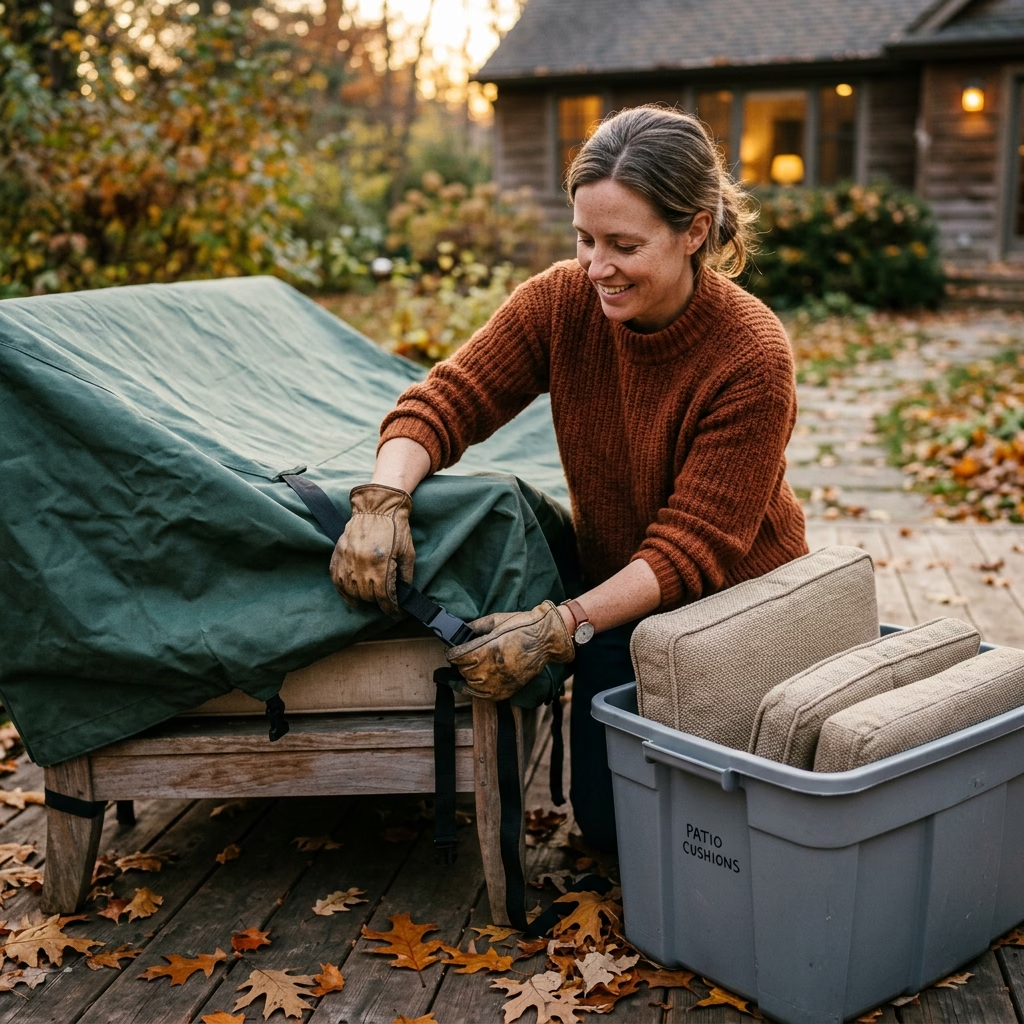
While some outdoor furniture materials can remain outside throughout winter, cushions and fabric accessories generally require additional protection.
Cushions can absorb moisture from rain, snow, and humidity. When moisture remains trapped inside the fabric or foam, it can contribute to mildew, unpleasant odors, and material deterioration.
Before winter arrives:
- Remove cushions from chairs, benches, and outdoor sofas.
- Clean cushion covers according to the manufacturer’s instructions.
- Allow all fabric materials to dry completely.
- Store cushions in a dry indoor location.
- Use breathable storage bags to protect them from dust and moisture.
If you have furniture with removable cushions, consider purchasing suitable storage containers to keep everything organized until warmer weather returns.
For poly lumber furniture, the furniture frame itself can generally remain outdoors, while removable cushions should be stored separately.
3. Protect Wooden and Metal Furniture From Snow and Moisture
Wooden and metal outdoor furniture often requires more attention during winter because these materials can experience damage from prolonged exposure to moisture and changing temperatures.
Protecting wooden furniture
Wood naturally absorbs and releases moisture. Repeated freezing and thawing can contribute to cracking, splitting, warping, and damage to joints.
Before winter:
- Remove dirt and moisture from wooden surfaces.
- Inspect for cracks, loose joints, and damaged finishes.
- Apply an appropriate outdoor wood sealant if recommended for the furniture.
- Store smaller wooden furniture pieces in a dry, covered location.
- Use suitable protective covers when furniture must remain outdoors.
Protecting metal furniture
Metal furniture can experience corrosion, especially when protective coatings become damaged.
To prepare metal furniture for winter:
- Clean the surfaces thoroughly.
- Inspect for rust and chipped paint.
- Repair damaged protective coatings using suitable products.
- Remove moisture from joints and connection points.
- Store lightweight metal furniture in a sheltered area when possible.
Choosing durable outdoor furniture materials can reduce the amount of seasonal maintenance required. This is one reason many homeowners consider poly lumber furniture when upgrading their patios and backyards.
4. Consider Whether Your Furniture Needs Winter Storage
Not every outdoor furniture set needs to be moved indoors when winter arrives. The right approach depends on the material, construction quality, manufacturer’s recommendations, and the weather conditions in your area.
Traditional wooden furniture, wicker furniture, and some metal furniture may benefit from indoor or covered storage during prolonged periods of harsh weather.
However, high-quality HDPE poly lumber furniture is designed for year-round outdoor use.
Unlike wood, HDPE does not absorb water in the same way, so it is not susceptible to the same moisture-related expansion, cracking, and rotting. Quality poly lumber also incorporates UV protection to help maintain its appearance during outdoor exposure.
This makes poly furniture a practical option for homeowners who want durable outdoor seating without having to move heavy furniture into a garage or storage shed every winter.
If you prefer to keep your furniture covered, choose breathable furniture covers that allow air circulation. Avoid tightly wrapping wet furniture in non-breathable plastic sheeting.
For more information, read our detailed guide on winter storage tips for poly outdoor furniture.
5. Secure Lightweight Furniture Against Strong Winter Winds
Winter weather does not only involve snow and freezing temperatures. Strong winds can also move lightweight outdoor furniture, potentially causing damage to furniture, nearby property, or other outdoor structures.
Before the colder months arrive, inspect your patio and backyard for furniture that could become unstable during windy conditions.
Consider these precautions:
- Move lightweight chairs into a sheltered area.
- Stack compatible chairs according to manufacturer instructions.
- Secure furniture that could easily tip over.
- Store lightweight accessories and decorations indoors.
- Position furniture away from exposed edges and areas with strong wind exposure.
Poly lumber furniture is generally heavier than many conventional plastic furniture options, which can help provide additional stability. However, exposed locations may still require sensible precautions, especially during severe storms.
6. Remove Snow and Ice Carefully During Winter
Even weather-resistant outdoor furniture benefits from sensible seasonal care.
If snow accumulates on outdoor tables, chairs, or benches, remove excessive buildup using a soft broom or brush. This helps prevent unnecessary stress on furniture components and makes the outdoor area easier to maintain.
Avoid using sharp tools, metal scrapers, or abrasive materials that could scratch furniture surfaces.
You should also be careful when using ice-melting products around outdoor furniture. Salt and certain chemical deicers can leave residue on surfaces and may affect metal hardware over prolonged exposure.
If salt or ice-melting products come into contact with furniture, rinse the affected areas with clean water.
For poly lumber furniture, these simple precautions are generally sufficient. The material is designed to handle outdoor exposure, including freezing temperatures and seasonal weather changes.
7. Inspect Furniture Hardware and Connections
Winter preparation is also a good opportunity to check the overall condition of your outdoor furniture.
Over time, regular use, movement, and exposure to the elements can loosen screws, bolts, and other hardware.
Inspect the following components:
- Chair legs and supporting structures.
- Table joints and connecting points.
- Bench supports and seat connections.
- Swing chains and hanging hardware.
- Fasteners and other exposed metal components.
Tighten loose connections according to the manufacturer’s instructions and replace damaged hardware when necessary.
Quality poly outdoor furniture often uses corrosion-resistant hardware and durable construction methods, but periodic inspections are still a sensible maintenance practice.
8. Choose Outdoor Furniture That Can Handle Winter Weather
One of the most effective ways to simplify winter preparation is to choose furniture made from materials designed for year-round outdoor conditions.
When shopping for new patio furniture, consider how different materials perform under changing weather conditions.
Wood furniture: Offers a traditional appearance but may require regular staining, sealing, and protection against moisture.
Metal furniture: Provides strength and a modern appearance, but some finishes and metal components can be affected by rust and corrosion.
Wicker furniture: Can create a comfortable outdoor environment, although its durability depends heavily on the materials used and the quality of construction.
Poly lumber furniture: Offers a combination of durability, weather resistance, and low maintenance. Quality HDPE furniture does not absorb moisture like traditional wood and does not require routine painting or sealing.
At TimberCraft Poly, our Amish-made outdoor furniture is crafted using high-quality Tangent poly lumber. The material is designed to withstand changing outdoor conditions while maintaining its appearance and functionality.
From comfortable poly Adirondack chairs to durable poly outdoor tables, homeowners can explore furniture options suited to different outdoor living spaces.
9. Prepare Your Patio for Spring While Winterizing
Winter preparation is also a good opportunity to organize your outdoor living area so that it is ready for the next season.
Remove unnecessary accessories, clean outdoor rugs, organize furniture cushions, and inspect your patio for any repairs that may be needed.
If you have poly outdoor furniture, consider arranging your chairs, tables, benches, and other pieces in a way that makes the best use of your available space.
For example, Adirondack chairs can create a comfortable seating area around a fire pit, while an outdoor dining set can make a patio more functional for family gatherings.
Planning these arrangements before spring arrives can save time and help you enjoy your outdoor space as soon as warmer weather returns.
Enjoy Every Season With Durable Poly Outdoor Furniture
Preparing outdoor furniture for winter does not have to involve complicated maintenance routines. Cleaning surfaces, storing cushions, inspecting hardware, and protecting materials from unnecessary exposure can help keep traditional outdoor furniture in good condition.
However, choosing the right furniture material can make an even bigger difference.
High-quality poly lumber furniture provides an alternative for homeowners who want durable outdoor seating without the regular sanding, staining, painting, and sealing associated with traditional materials.
At TimberCraft Poly, we combine Amish craftsmanship with premium Tangent poly lumber to create outdoor furniture designed for lasting comfort and durability. Our collection includes Adirondack chairs, dining sets, tables, benches, and other outdoor furniture options for patios, porches, and backyards.
Explore our complete poly outdoor furniture collection and discover furniture designed to make outdoor living more enjoyable throughout the year.
Make winter preparation easier and enjoy outdoor furniture built to handle every season.
Why Schedule a Call?
Popular Insights

2027 Outdoor Furniture Trends | Colors, Materials & Designs
Nov. 14, 2026
Poly Outdoor Furniture vs. Aluminum: Worth the Investment in 2026?
Nov. 06, 2026
Best Poly Outdoor Furniture Sets for Lake Houses and Vacation Homes
Nov. 01, 2026
Amish Poly Furniture vs. Factory-Made Outdoor Furniture
Oct. 02, 2026
Poly Furniture Colors: How to Choose Your Perfect Palette
Oct. 01, 2026Our Categories