

When you picture a luxury backyard in 2030, imagine furniture you haven’t thought about in five years.
Not because you forgot about it. Because it never demanded your attention.
The shift happening right now in high-end outdoor spaces isn’t about choosing better materials. It’s about redefining what luxury actually means. The new status symbol won’t be ornate teak that everyone notices. It will be furniture engineered to become invisible in your daily life while staying pristine through brutal weather, year after year.
We’re watching wealthy homeowners flip the script on outdoor living. Their time and peace of mind have become far more valuable than flashy materials that require constant babysitting.
The Breaking Point Most Wealthy Homeowners Hit
Picture this: A tech executive in the Hamptons spent a fortune on handcrafted teak furniture. It looked stunning at first. One rough winter later, the pieces showed fading and mildew stains.
He pointed at his expensive furniture and said: “Man, I’m done babysitting this stuff every season. It’s supposed to be my escape, not another chore.”
Then he noticed the poly pieces nearby. Brand new appearance. Zero effort required. His eyes lit up.
That moment flipped everything. The real status symbol wasn’t the fancy wood everyone notices. It was furniture that quietly disappears so he could actually enjoy the space instead of managing it.
Most wealthy homeowners reach this breaking point after a painful, expensive lesson. They invest tens of thousands in beautiful wood furniture because it looks luxurious and carries classic status appeal. The first season feels like a dream.
Then reality hits.
After one harsh winter of snow, ice, and freezing temperatures followed by a brutal summer of intense UV rays and humidity, the wood begins to fade, gray out, crack, and sometimes warp. Cushions mildew. Hardware rusts. The relaxing backyard sanctuary slowly turns into another item on the to-do list.
They spend weekends power-washing, sanding, oiling, staining, storing pieces for winter, or paying landscapers extra just to keep it looking decent. Many say the same thing: “I paid premium prices for something that now feels like a part-time job.”
That frustration builds over one or two seasons until they hit the breaking point, usually during spring cleanup or when repair bills stack up again.
The Smarter Path Forward
A growing number of savvy homeowners skip the pain entirely. They learn from friends, see perfectly maintained poly furniture in neighbors’ yards, or find honest before-and-after stories online showing the dramatic difference after several years.
These people do their research, talk to others who already made the switch, and decide upfront they don’t want to repeat the same cycle their friends went through.
They realize early that true luxury in outdoor living today isn’t about how impressive the furniture looks on day one. It’s about how it looks on year five, year ten, and beyond, with literally zero effort from them.
According to industry research, the plastic lumber market is forecast to reach $11.5 billion by 2030, growing at a CAGR of 6.90% during 2024-2030. This isn’t a niche trend. It’s a massive industry shift happening right now.
Second-Home Owners Are Leading the Charge
Second-home owners behave quite differently from primary homeowners when making this decision. They’re actually one of the biggest accelerators of the shift toward low-maintenance poly lumber furniture.
The key difference comes down to how they use and experience their outdoor space.
Primary homeowners live with their backyard every single day. They’re more willing to tolerate some seasonal maintenance if the furniture looks beautiful in the moment. They see it as part of their daily environment and often feel more emotionally attached to traditional materials like teak or cedar.
Second-home owners have a very different reality. They visit their vacation home on weekends, during holidays, or for a few weeks in the summer. When they arrive after being away for weeks or months, they want the space to feel perfect immediately.
They don’t have time to spend their limited vacation days power-washing furniture, applying sealant, replacing faded cushions, or dealing with winter damage. Their backyard needs to be turnkey ready the moment they walk in the door.
Because they’re not there full-time, traditional wood furniture often suffers more. It sits exposed to the elements for long stretches without anyone caring for it, which accelerates fading, cracking, mold, and deterioration.
Many second-home owners arrive to find their expensive teak pieces gray, warped, or covered in mildew after a long winter. That frustration hits harder because their time at the property is supposed to be relaxing, not filled with repair projects.
Second-home owners are often the first to switch to high-quality poly lumber. They’re willing to pay the premium upfront because they value reliability and zero maintenance far more than the initial “wow” factor of real wood.
Where This Shift Is Happening First
The shift toward poly lumber in luxury outdoor spaces is playing out right now most visibly in specific regions where the pain of traditional materials meets the realities of climate, lifestyle, and second-home ownership.
Florida’s Gold Coast — especially West Palm Beach, Jupiter, Palm Beach, and Naples — tops the list because of intense sun, salt air, humidity, and frequent storms. Teak and other woods degrade fast here, requiring constant upkeep that busy owners and seasonal residents simply won’t tolerate.
Second-home owners and snowbirds arrive wanting their outdoor space ready to enjoy immediately, not a project. Recycled poly furniture has become a favorite because it laughs at the weather and needs zero maintenance between visits.
The Hamptons and other upscale Northeast second-home markets (including parts of Connecticut and New Jersey shore areas) face harsh winters with snow, ice, and freeze-thaw cycles that destroy wood furniture left outside. Many owners close up their homes for months, only to return to faded, cracked, or mildewed pieces.
Aspen, Vail, and other Colorado mountain resort communities deal with extreme temperature swings, heavy snow, intense UV at altitude, and short outdoor seasons. Owners want furniture that survives winter storage-free and looks pristine the moment the snow melts.
Scottsdale, Paradise Valley, and other desert Southwest luxury enclaves battle blistering heat, intense sun, and dramatic temperature drops at night that punish wood and fabrics. Poly’s fade resistance and zero-maintenance profile win converts quickly.
Napa Valley, Sonoma, and parts of coastal California see wine country homeowners balance aesthetics with practicality. They’ve watched beautiful wood age poorly under relentless sun and occasional heavy rains, and many now prioritize pieces that maintain that clean, elevated look for decades without seasonal rituals.
What these places share is a high concentration of affluent second-home owners or part-time residents who treat their properties as escapes rather than daily responsibilities. They experience the frustration of neglected wood furniture more acutely, have the budget to invest in premium solutions upfront, and influence trends through social circles and designers.
The Four Forces That Will Create Dominance by 2030
To truly dominate the luxury outdoor furniture market by 2030—not just nibble around the edges in those leading regions—poly lumber needs four big things to line up between now and then. They’re already starting to happen faster than most people expect.
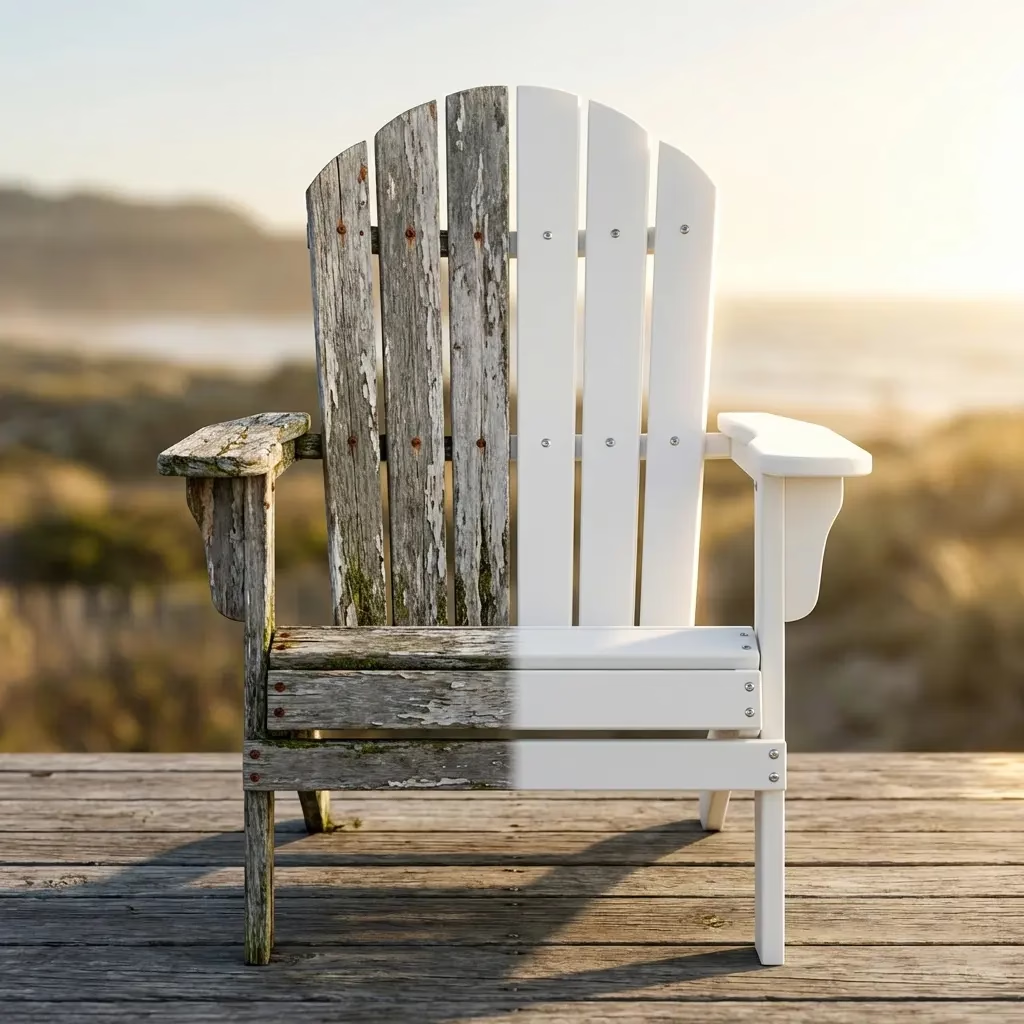
First, the visible proof has to explode. We’re talking thousands more high-profile installations in primary homes (not just vacation properties) where designers and influencers can show side-by-side photos of poly pieces looking brand new after five, ten, and fifteen years next to wood that’s faded and cracked.
Once affluent primary homeowners see their neighbors’ backyards staying perfect with zero effort, the emotional barrier drops and the switch becomes contagious.
Second, manufacturing scale and design innovation have to mature. Right now poly is still premium-priced because production volumes are relatively small. By 2028-2029, larger plants, better color-fast technology, and more sophisticated textures that mimic high-end teak or driftwood will bring the cost gap down while expanding the aesthetic range.
When poly stops feeling like “the plastic option” and starts feeling like the sophisticated, modern default, the perception flips for good.
Third, extreme weather and climate awareness will do the heavy lifting. As hurricanes, heat waves, freeze-thaw cycles, and UV intensity keep intensifying, the real-world failure rate of traditional wood accelerates.
Homeowners who’ve already replaced their teak set twice will no longer view poly as optional. They’ll see it as the only rational choice that protects their investment and their sanity.
Fourth, the cultural narrative around luxury itself has to complete its shift. The next generation of wealthy buyers (the 35-50 crowd) already values time freedom and low-stress living over old-school status symbols.
When “I haven’t touched my outdoor furniture in seven years” becomes the ultimate status marker whispered at dinner parties and posted on Instagram stories, poly stops being a niche solution and becomes the quiet standard for anyone who can afford it.
According to market analysis, roughly $6 trillion was passed down globally in 2025 alone, creating a new wave of well-capitalized buyers who are moving quickly and often paying cash. These aren’t your grandparents’ luxury buyers. They’re younger, tech-savvy, and prioritizing time freedom and sustainability over traditional status symbols.
The Real Cost Comparison
Right now, a wealthy homeowner looking at a comparable luxury setup faces a noticeable but not insurmountable price gap between high-end teak and quality recycled poly lumber furniture.
Take a classic Adirondack chair: a premium grade-A teak piece typically runs $450 to $750 depending on finish and features, while a well-made poly equivalent from established makers (including handcrafted Amish-built lines like TimberCraft) lands between $350 and $600. That puts poly roughly 20-30% less expensive upfront on single pieces.
The difference widens on full dining sets. A solid teak 6- or 7-piece outdoor dining set with a large table can easily hit $5,500 to $8,000 or more. A similar-sized, high-quality poly set in the same style category usually comes in between $2,800 and $5,000. The raw sticker-price advantage for poly is often 30-50% right out of the gate.
For a complete luxury backyard (multiple seating areas, dining, benches, and loungers), the total outlay might look like $12,000-$18,000 for top-tier teak versus $7,000-$11,000 for equivalent poly. That’s still thousands in savings before you even factor in the lifetime costs.
But here’s what changes everything: annual teak maintenance involves oiling and deep cleaning, costing $50-100 in materials and time. Professional refinishing averages $619 per piece when things get really rough. Compare that to poly furniture’s lifetime cost: zero dollars in annual upkeep.
The real barrier for many wealthy buyers isn’t the absolute dollar amount. It’s perception and the lingering “plastic” stigma that makes poly feel like a downgrade even when the math favors it.
When the Stigma Breaks
The exact moment the “plastic stigma” breaks usually happens during a backyard visit when the homeowner physically touches a high-quality poly piece that’s already been outside for five, seven, or even ten years and realizes it still looks and feels brand new.
They run their hand across the surface expecting that cheap plastic feel they remember from old patio chairs. Instead they’re surprised by the solid weight, the realistic wood-grain texture, and the complete absence of fading, cracking, or roughness.
Then they look over at their own expensive teak set sitting right beside it—grayed out, weathered, stained, and in need of oiling or sanding—and the comparison hits them instantly.
That side-by-side contrast is the turning point.
In sales conversations, it often comes right after the homeowner says “I don’t want plastic furniture,” when the salesperson calmly invites them to feel a 5-year-old piece that’s been through brutal winters and summers with zero maintenance.
The second they touch it and see the difference with their own eyes, the mental switch flips from “this is plastic” to “this is actually better than wood.” That single tactile, visual moment kills the stigma faster than any marketing pitch ever could.
How Manufacturers Will Accelerate This by 2028
The manufacturers and retailers who want to own the luxury market by 2028 need to stop waiting for backyard visits and instead bring that exact tactile moment straight into every showroom and online experience.
Picture walking into a store and seeing two identical looking chairs side by side, one labeled “teak after 7 years” and the other “poly after 7 years” with the poly still smooth and flawless while the wood is gray, cracked, and rough.
Or imagine an online configurator where you can swipe through real customer photos showing the same set in year one versus year five versus year ten complete with zoomable close-ups and touch simulation videos that let you feel the texture through your phone.
Retailers will install small outdoor test zones right on their lots where pieces sit exposed to weather for months so shoppers can physically run their hands across them and instantly compare.
By 2028 the smartest brands will also launch simple AR apps that let you drop a virtual poly piece into your own backyard photos and fast forward five or ten years of simulated sun, rain, and snow so the difference becomes impossible to ignore before you ever click buy.
When that instant proof is available in every sales channel, the plastic stigma dies the moment someone touches or sees the reality.
The Holdouts Who Will Keep Teak Alive
In 2030, the people still choosing traditional teak despite all the overwhelming evidence will be a small but passionate group of purists and traditionalists who simply value the soul and story of real wood over effortless perfection.
They’re the homeowners who love watching natural teak slowly silver and develop that classic patina over decades, seeiang it as a living piece of furniture that tells the story of their family’s time in the backyard rather than something that stays frozen in time.
Many of them enjoy the seasonal ritual of oiling and caring for it, viewing maintenance as a meditative connection to their outdoor space instead of a chore.
Others are collectors or design traditionalists who insist on authentic materials for heritage homes or formal gardens where the slight imperfections and natural variations feel more luxurious and personal than any manufactured consistency.
A few live in milder climates where the upkeep truly isn’t burdensome, or they have staff that handles it.
For these holdouts the decision isn’t about ignoring the data. It’s about consciously choosing the emotional and aesthetic experience of real wood even if it means more work, because for them the journey and the character matter more than the destination of zero maintenance.
Poly will dominate everywhere else, but this niche group will keep teak alive as a deliberate lifestyle choice.
Beyond Furniture: The Entire Backyard Ecosystem Goes Zero-Maintenance
By 2030, the zero-maintenance luxury trend that poly furniture is pioneering will spread well beyond chairs and tables into almost every category of outdoor living.
We’ll see high-end decking and porch flooring made from advanced composite and poly lumber that never needs staining, sealing, or power-washing, staying beautiful through decades of weather.
Pergolas, arbors, and shade structures will shift to fully encapsulated poly or composite beams and posts that resist rot, fading, and cracking without any annual upkeep.
Outdoor kitchens and bars will move toward countertops, cabinetry, and islands built from weatherproof poly composites that handle grilling grease, wine spills, and freezing temperatures while looking like high-end stone or wood.
Even fencing, gates, and privacy screens will adopt recycled poly materials that eliminate painting, staining, and replacement cycles.
Planters, raised garden beds, and landscape edging will become virtually indestructible yet elegant. Pool decking, docks, and marine applications will largely convert to low-maintenance poly because nothing else survives constant water exposure as cleanly.
Lighting posts, exterior shutters, and even outdoor furniture storage sheds will follow the same path.
The common thread is that anything exposed to the elements will be re-engineered for “set-it-and-forget-it” permanence, turning the entire backyard into a true extension of the home that requires almost no attention or maintenance.
Research from the Sustainable Furnishings Council found that 67% of consumers felt that making products sustainably was the right thing to do. This isn’t a fringe movement anymore. It’s mainstream among the affluent.
Poly furniture made from recycled HDPE—often 90% post-consumer material—lets wealthy buyers express both their status and their environmental values.
What This Means for You
When that future arrives and everything from the deck to the pergola to the furniture requires no upkeep, wealthy homeowners will reclaim all that time and mental energy they used to spend on maintenance.
They’ll spend it with family. Building businesses. Traveling. Actually relaxing in the spaces they created instead of constantly managing them.
The brands that deliver consistent quality, long warranties, and beautiful designs today will be the ones sitting in those spaces in 2030 while traditional wood becomes the occasional nostalgic exception rather than the rule.
At TimberCraft, we blend Amish craftsmanship with modern poly lumber durability to create outdoor furniture built to last a lifetime. Our pieces come with a lifetime warranty because we know they’ll still look brand new years from now, through whatever weather comes your way.
The tipping point isn’t a distant dream. It’s a very predictable outcome of trends already in motion.
The question isn’t whether zero-maintenance luxury will dominate by 2030.
The question is whether you’ll be ready when it does.
Related Posts
View All

Uncategorized
10 min Read
The Recycled Poly Revolution: How Sustainable Materials Are Reshaping Business Models
The recycled plastic lumber market exploded from $1.1 billion in
Learn More
Uncategorized
10 min Read
The Data Behind Solar-Powered Outdoor Furniture
We discovered something unexpected when we started listening to our
Learn More
Uncategorized
10 min Read
The Outdoor Living Investment Boom: What the Data Reveals About Home Value and Lifestyle Returns
Most homeowners think about outdoor furniture as a purchase. You
Learn More