
The recycled plastic lumber market exploded from $1.1 billion in 2020 to a projected $1.9 billion by 2025. That’s a 73% surge in just five years.
Outdoor furniture leads the charge with double-digit growth rates.
Skeptical business owners assume green means pricey or fringe. The data tells a different story. Mainstream demand comes from everyday folks ditching wood for HDPE that lasts forever without rot or refinishing bills. This proves sustainable materials offer smart business opportunities that cost less long-term and pull in customers who vote with their wallets for planet-friendly products.
The Real Psychology Behind Premium Sustainable Purchases
When someone chooses a $400 recycled poly Adirondack chair over a $150 wooden one, environmental concern plays a smaller role than you think.
The actual driver? Weekend freedom.
Customers don’t wake up on Saturday morning thinking about saving 30 milk jugs from landfills. They think about not spending three hours sanding, staining, or replacing rotted deck furniture. According to IBM’s 2020 report, 80% of North American respondents want to know product origins, and 69% will pay a premium for recycled products. But that premium only works when you lead with the selfish win.
The biggest mistake sustainable businesses make is preaching planet-saving while burying the personal benefit. Customers tune out the “30 milk jugs saved” lecture if you lead with it. Their eyes light up when you hit them first with “You’ll never sand, stain, or replace this chair again in your lifetime.”
Lead with the lazy, hassle-free, money-saving life customers actually crave. Slip in the eco-bonus as the cherry on top.
Flip that order and watch conversion rates double.
The Data Behind Positioning Strategy
A/B testing from eco-furniture brands backs this up. One campaign flipped headlines from “Save the planet with recycled tees” to “No more itchy cotton, just soft, sweat-proof comfort that lasts.” Conversions jumped 47% in a month.
Another poly lumber seller showed practical “hassle-free patios” messaging lifted add-to-cart rates by 32% over green-focused copy. Get it wrong with planet-first preaching and bounce rates spike 25-40%. Nail the selfish win lead and you’re looking at 30-50% overall lift in sales velocity.
Brands with strong sustainability narratives grow 2.5x faster than average. But that growth comes from hooking immediate “me” benefits before the warm fuzzy eco glow seals the deal.
The Lifetime Warranty Math That Changes Everything
Most businesses think warranties are cost centers. The numbers tell a different story.
A $150 cheap wooden chair dies every three to four years. One customer buys three over ten years. You pocket $450 total with $120 gross profit after materials and labor.
A $400 poly Adirondack with lifetime warranty? One sale, $400 revenue, $220 profit, and almost zero returns because HDPE lasts 25-plus years.
You make 83% more profit per customer while serving them once instead of three times.
The real-world failure rate on quality HDPE furniture sits under 0.4% over ten years. Mostly cracked arms from people standing on seats, not material breakdown. One $400 chair might cost you $80-$120 to replace once a decade.
Structure it smart: offer “lifetime warranty to original owner, non-transferable, shipping not included, abuse excluded.” You eat the rare part, customer pays freight ($60-$90), and cash flow stays safe.
The warranty screams “buy once, done” in every ad, turns buyers into evangelists, and costs you less than 2% of revenue while wooden competitors eat 8-12% in replacements and complaints.
It’s the cheapest marketing insurance you’ll ever buy.
The Referral Engine Economics
Customers send friends because “it’s still perfect after a decade.” The warranty becomes the magnet that locks in higher margins and turns one buyer into a decade of free referrals.
You’re trading repeat purchases for reputation-based growth. Products marketed as sustainable grew 2.7x faster than those that were not, according to NYU Stern Center for Sustainable Business. That growth advantage is substantial for startups competing against established players.
The Supply Chain Reality Nobody Talks About
Everyone assumes sourcing recycled HDPE is complicated or expensive. The opposite is true.
Recycled HDPE is now cheaper than virgin plastic in most months. Post-consumer bales run $0.38-$0.52 per pound versus $0.68-$0.85 for new resin. Bulk sheet prices land 12-18% lower than five years ago.
The hidden savings explode in production.
No drying ovens needed like with wood. Zero waste from warping or knots. CNC cuts are 40% faster because the material never moves. A small shop with one extruder and two routers can hit the ground with $60k-$90k in equipment, source locally from Midwest milk-jug recyclers, and be cash-flow positive in four to six months.
Recycled HDPE typically delivers 10-30% cost savings depending on market conditions. This provides immediate margin advantages for manufacturers who source strategically.
It’s honestly easier and cheaper than real wood ever was.
The Three Make-or-Break Decisions
The fundamentals look good on paper. Where do new sustainable product businesses actually fail?
Decision one: Nail a single hero product like a classic Adirondack and perfect it before adding colors or styles.
Decision two: Sell direct-to-consumer online from day one. No middleman markup killing your margin.
Decision three: Price for profit from the first chair ($399-$450 retail) instead of racing to the bottom at $199.
Most newbies flop by chasing every custom order too soon, dumping cash into 47 color options, or wholesaling at 40% off to stores. Stick to one killer product, one sales channel, and full-margin pricing for six months and you’re printing money while the scattered ones bleed out.
When Customization Becomes Profit Instead of Pain
You earn the right to 47 colors the day your single hero product is selling 8-10 units a week on autopilot and you’ve got six months of cash in the bank.
Until then, offer just five crowd-pleaser colors that cover 90% of buyers and keep inventory lean: black, white, weathered gray, coastal teal, and cedar. You’re not sitting on $40k of slow-moving purple sheets while rent is due.
Once the core five are flying out the door and reviews are pouring in, roll out new colors two at a time as paid pre-orders.
Customization becomes profit when it’s funded by customers who already love the product instead of your optimism.
Rapanui’s custom design webpage that lets customers create their own products has a conversion rate five times higher than other site pages. Customizable products are their best-selling category. This demonstrates how customization in sustainable products commands premium engagement when introduced at the right time.
Building Trust Without the Certification Maze
Sustainable startups get lost in certifications, eco-labels, and trying to prove their green credentials. You can build bulletproof trust in 90 days without spending a year and $50k on certifications customers don’t understand.
Step one: Plaster giant photos on every product page showing the exact milk jugs and bottle caps your HDPE came from this month.
Step two: Publish a one-page “plastic saved” counter that updates live with every order. “You just diverted 312 jugs from landfill.”
Step three: Film a 60-second shop video of the crew slicing open a fresh recycled sheet and let customers hear the crunch.
Real buyers trust their eyes and a running counter way more than a fancy logo they can’t pronounce. Transparency beats certificates every time and costs almost nothing.
According to a survey in Europe and the United States with 1,000 respondents, over 70% of consumers will pay an additional 5% for a green product if it meets the same standards as an alternative. But less than 10% will choose green products if the price premium increases up to 25%. This pricing threshold is critical for positioning.
The Marketing Machine That Sells Without Selling
You’ve got transparency running. Customers see milk jugs transform into chairs. How do you turn that into a marketing machine that drives consistent traffic and sales?
Run a dead-simple three-pillar content loop.
Pillar One: Weekly 15-Second Transformation Reels
Show a real order’s plastic bales turning into a finished Adirondack. No voiceover, just crunching sounds and a counter ticking up diverted jugs. Post every Monday.
Pillar Two: Monthly Customer Proof Photos
Customer porch photos with the caption “Still zero maintenance after X Iowa winters.” User-generated proof beats polished ads. Post every Thursday.
Pillar Three: One Long-Form Story Per Month
Title it “Your weekends are safe now.” Bury the eco-win inside stories of no sanding, no splinters, and grandkids playing barefoot. Drop the story on the 1st.
Watch traffic and sales climb 20-40% month over month without ever lecturing anyone about the planet.
62% of marketers say green content increases engagement, and 48% of companies saw higher conversion rates after sustainability campaigns. These improvements transform businesses when you focus on benefits first.
The Universal Business Principle You Can Steal Tomorrow
This applies to any industry. Dog toys. Kitchen tools. Office supplies. Anything.
Sell the permanent fix to a recurring pain instead of another temporary band-aid.
Find the thing your customer keeps rebuying because the cheap version fails fast. Build the version that ends the cycle forever. Charge a fair premium for it. Back it with a warranty that scares you just a little.
That single shift turns one-time buyers into lifelong fans and your product into the last one they’ll ever need.
Whether it’s dog toys that actually survive a German Shepherd, kitchen tools that never rust or stain, or chairs that never rot, the principle remains the same. The global recycled plastic lumber market is valued at $1.54 billion in 2024 and projected to expand at a CAGR of 10.2% from 2025 to 2033, reaching an estimated $3.72 billion by 2033.
This explosive growth demonstrates that sustainable materials offer mainstream revenue opportunities for businesses willing to enter early.
The Moment You Know You’ve Made It
Businesses that successfully transition from competing on price to building lasting value hit a specific milestone.
Monthly revenue from customer referrals and repeat buyers quietly overtakes what they spend on ads.
Suddenly the marketing budget feels optional instead of oxygen. Cash flow smooths out because they’re no longer chasing the next sale to survive. They can raise prices ten to fifteen percent just by adding a new color without losing volume.
The owner stops checking the bank account every morning and starts sleeping through the night.
That’s the matrix. The business now grows because people can’t stop talking about the thing that finally ended their problem.
The Path Forward for Your Business
We help side hustles, startups, and small businesses escape the maze and enter the matrix. The REVREV Business Navigation Matrix provides a systematic roadmap for building businesses that generate sustainable revenue without breaking the bank.
You don’t need expensive certifications or complicated supply chains. You need clear direction, proven systems, and support when you hit obstacles.
The recycled poly revolution demonstrates what’s possible when you combine environmental responsibility with smart business fundamentals. Lower material costs. Higher margins. Faster production. Built-in referral engines. A content system that works.
Your business can implement these same principles starting tomorrow. Find the recurring pain your customers face. Build the permanent solution. Price for profit. Back it with confidence. Tell the story that leads with their selfish win.
The maze keeps millions of business owners stuck in dead ends.
The matrix offers a clear path to revenue that works across industries. Whether you’re making furniture, dog toys, kitchen tools, or anything else, the fundamental principles remain the same.
Build once. Sell the end of a problem. Watch referrals overtake ad spend.
That’s how you bring to life the business income in you.
Related Posts
View All
Uncategorized
7min Read
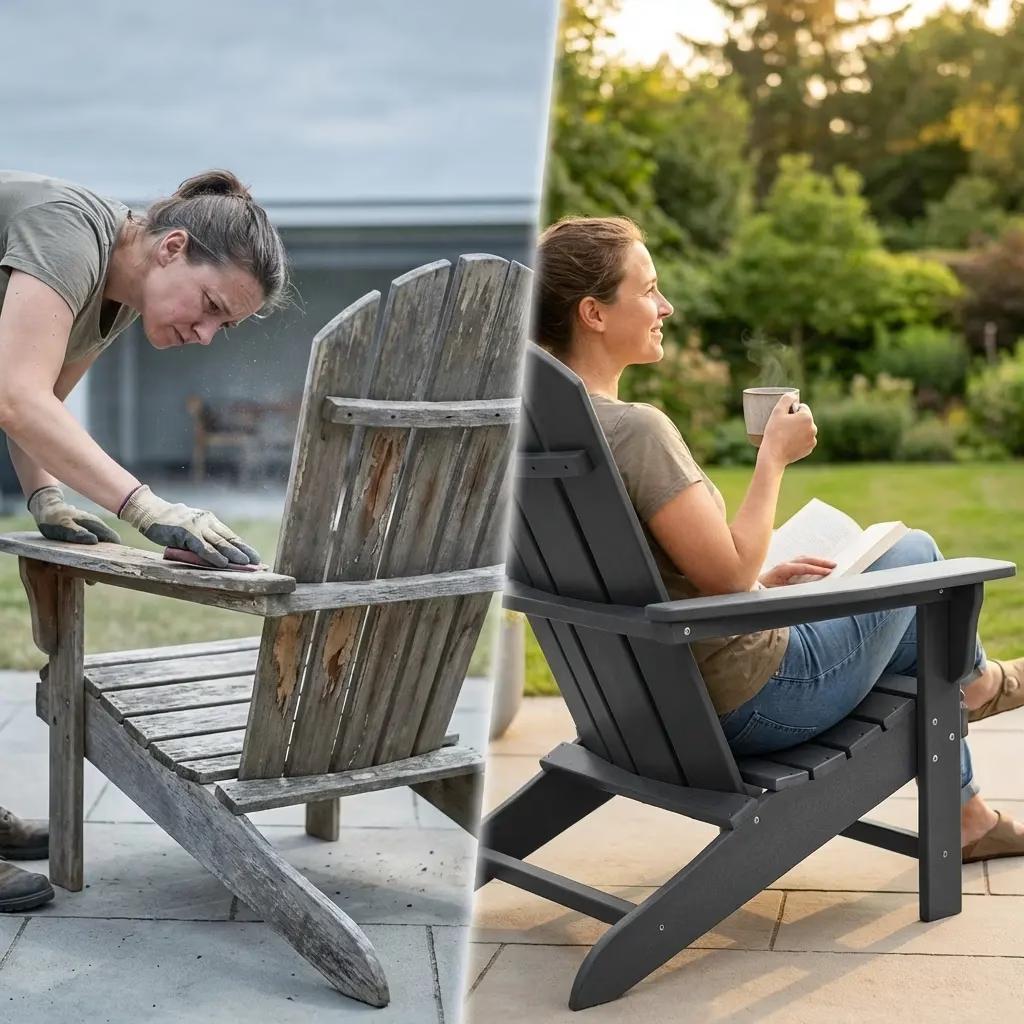
Why Homeowners Are Choosing Low-Maintenance Outdoor Living Over Endless Upkeep
Something shifted in 2025. Homeowners stopped asking “How does it
Learn More
Uncategorized
7min Read
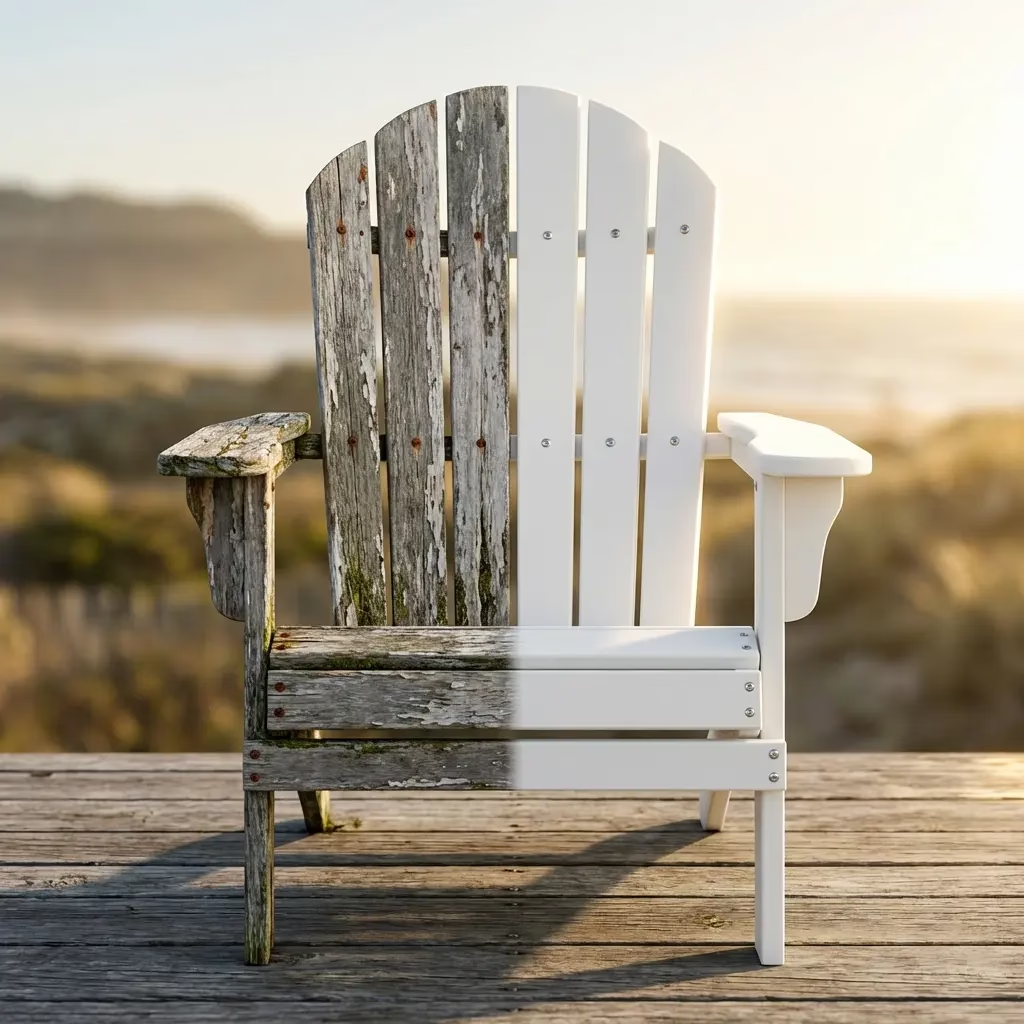
The Outdoor Living Investment Boom: What the Data Reveals About Home Value and Lifestyle Returns
Most homeowners think about outdoor furniture as a purchase. You
Learn More
Uncategorized
7min Read
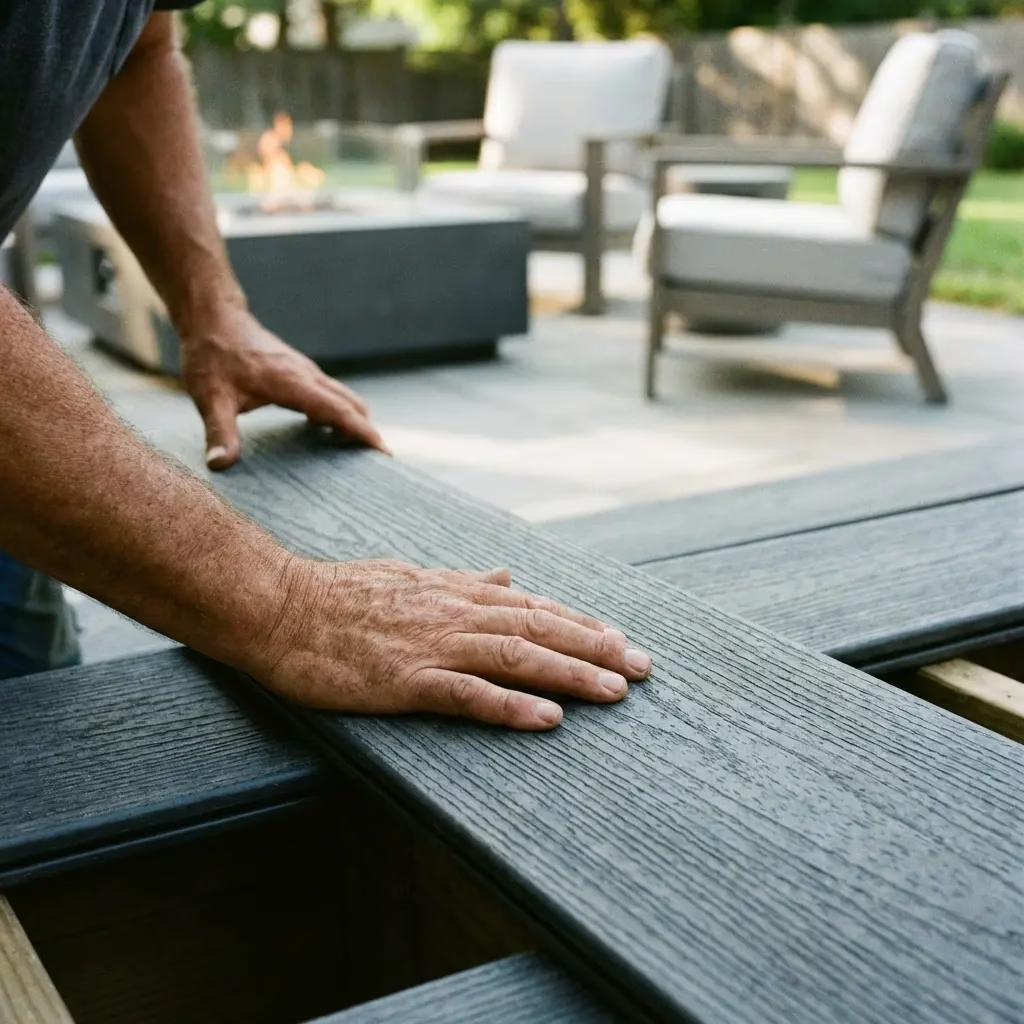
Why Sustainable Materials Are Reshaping Outdoor Living and What It Means for Your Business
When you look at recycled poly lumber transforming the outdoor
Learn More