
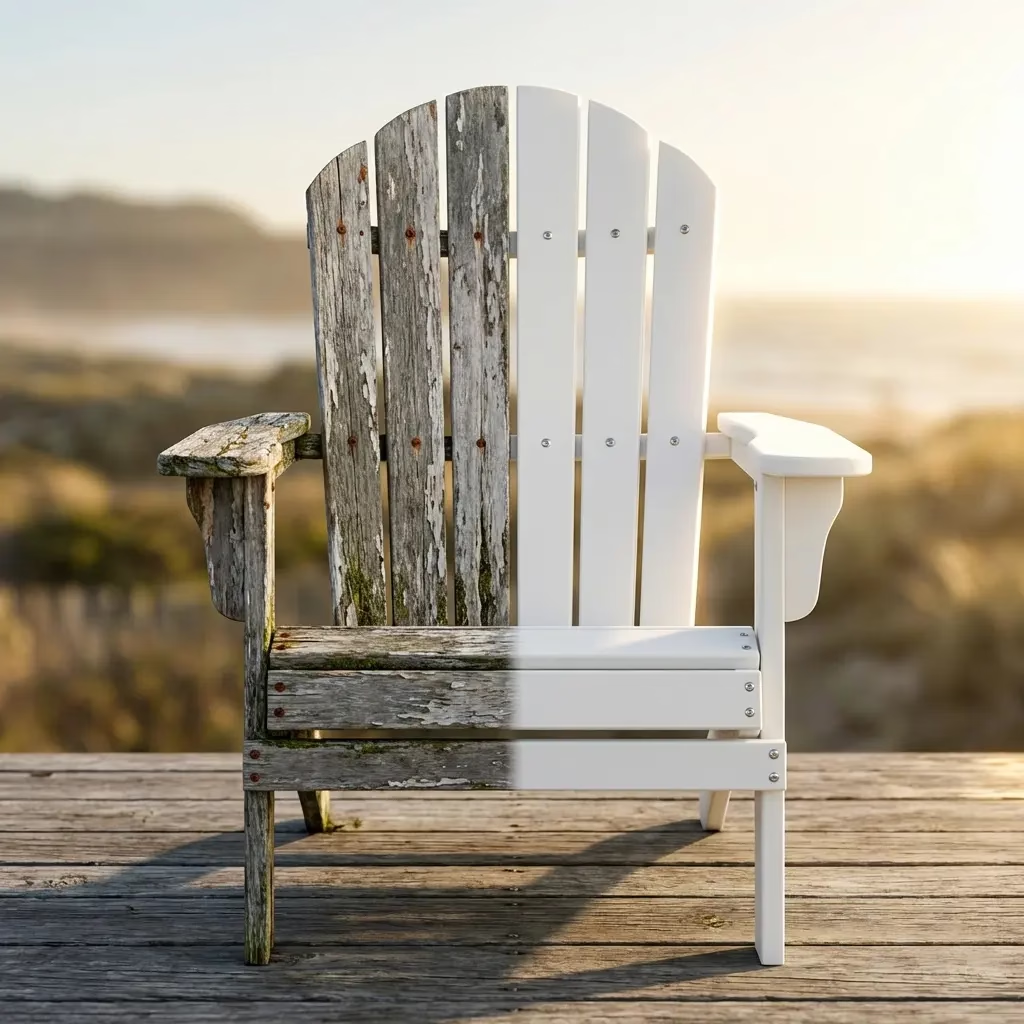
Most homeowners think about outdoor furniture as a purchase. You buy a table, some chairs, maybe a grill. You spend money, and you’re done.
But that’s not how smart investors think about outdoor living spaces.
The fundamental shift is moving from buying a product to buying a solution that reduces future risk and cost. Someone who is merely spending money focuses on immediate aesthetics or the lowest price. An investor mindset asks different questions: Will this hold up? Will it still look good in five years? What will I spend on repairs, replacements, and maintenance?
The smart investor treats outdoor living as a long-term asset. They choose materials that weather well, furniture that stays comfortable and safe, and designs that remain timeless. They value reliability, warranties, and durability because they understand the payoff isn’t just the first day of use.
It’s the next decade of peace of mind and avoided expense.
The Hidden Costs Most People Don’t Calculate
Over a 10-year period, the hidden costs of the traditional route can easily outpace the upfront savings.
Most people only compare the sticker price. They miss things like regular staining or sealing, repainting, replacing warped or rotted boards, fixing rusted hardware, and paying for weather-related repairs.
Here’s what the data shows: The average annual maintenance cost for a wood deck is estimated at $761. Over a 10-year period, maintenance expenses can range from $5,620 to $12,500.
In stark contrast, maintaining a composite deck costs just $5-$15 annually.
There’s also the time cost—weekend hours spent maintaining the space—and the emotional cost of constantly dealing with wear and tear. When you choose a low-maintenance, durable outdoor solution, those expenses shrink dramatically.
You might pay more upfront, but you avoid recurring maintenance bills, fewer replacements, and fewer surprise repairs. And you get back your time.
Over ten years, that adds up to real savings. It’s why the “cheaper” option often becomes the more expensive one in the long run.
Time Cost Is Revenue Opportunity Cost
When someone’s building a business or side hustle, their weekends spent sanding and staining a deck aren’t just costing them time. They’re costing them revenue opportunities.
The simplest way to quantify it is to convert your time into a dollar value based on what you could earn instead. For a business owner, that might be the hourly rate they charge, or the revenue they could generate by working on client projects, marketing, or product development.
Even if you don’t have a fixed rate, you can estimate it by dividing annual income by working hours to get a realistic value per hour. Then multiply that by the hours spent on maintenance, repairs, or replacements.
The emotional cost is harder to quantify but shows up as burnout, reduced focus, and decision fatigue, which directly lowers productivity.
So the “cheap” option can actually shrink your earning capacity, while a durable solution gives you back hours that can be invested into growth.
The Maze vs. The Matrix: Two Different Approaches
For homeowners, the maze is the endless loop of choosing, buying, maintaining, repairing, and repeating.
It starts with a purchase decision based on style or price, then quickly becomes a cycle of upkeep—staining, sealing, replacing, fixing, and dealing with weather damage. Every year, the “simple” outdoor space becomes a recurring project that eats time, money, and peace of mind.
The matrix approach flips that by treating outdoor living as a system built around durability and low maintenance.
Instead of chasing trends, homeowners choose materials and designs that work with their climate, reduce ongoing costs, and simplify care. They plan for long-term use, prioritize weather-proof materials, and design for comfort and function rather than constant updates.
The result is a space that stays beautiful and functional without becoming a recurring chore, freeing them to enjoy the outdoors rather than manage it.
The Generational Shift Toward Longevity
There is real, measurable evidence that homeowners are starting to reject the old cycle of “buy cheap, replace sooner” and lean toward value that lasts.
Industry studies reveal homeowners aren’t just adding outdoor features on impulse. They’re planning major upgrades like outdoor kitchens and integrated living spaces rather than quick décor fixes. They’re willing to spend more on eco-friendly, low-maintenance materials because they see long-term benefits.
Surveys show sustainability influences buying decisions broadly, with a large share of consumers factoring environmental impact into purchases and willing to pay a premium for durable, responsible options.
Millennials and Gen X in particular are investing in structural improvements and personalization over trend-driven fads, signaling a generational shift toward longevity, function, and value rather than just style.
The ROI Data: Financial Returns and Lifestyle Value
When homeowners make the leap from “patio furniture” to a full outdoor living space like an outdoor kitchen or integrated deck, the ROI isn’t just theoretical.
Real estate data shows a measurable mix of financial return and lifestyle value.
Quality outdoor living upgrades like patios and decks often recoup a significant portion of their cost at resale. Patios frequently return around 80–100 percent of what was spent, and well-designed decks deliver similar strength in many markets.
Outdoor kitchens, especially in warm-climate or high-demand areas, can even deliver up to or above cost recovery, because buyers see them as functional extensions of living space rather than optional extras.
Beyond pure numbers, real estate professionals consistently note that usable outdoor spaces make homes feel larger, more attractive, and sell faster. That’s part of the “hidden” ROI most traditional analyses miss.
What Separates Quality Upgrades from ROI Killers
The choices that make or break ROI are less about style and more about durability, functionality, and how well the space feels like a real extension of the home.
Materials that maximize return are:
- Low-maintenance and weather-resistant
- Built to last, like composite or recycled poly decking
- Stainless steel fixtures
- UV-resistant finishes that don’t fade or warp
Design choices that improve ROI include creating defined zones (dining, cooking, lounging), ensuring flow between indoor and outdoor spaces, adding proper lighting, and using consistent aesthetics that match the home.
On the flip side, ROI gets killed by cheap materials and shortcuts: pressure-treated wood that rots, flimsy furniture that needs replacement, poor drainage that causes warping, and designs that don’t account for weather or usability.
Overly trendy looks that quickly feel dated can reduce appeal.
The strongest investments feel timeless, require minimal upkeep, and are built with quality materials that hold up in real life—not just in the brochure.
Material Performance: Poly Lumber vs. Traditional Wood
When you look at actual material performance data in outdoor conditions, the difference between poly lumber and traditional wood is more than just marketing. It shows up in real-world longevity and maintenance.
Poly lumber (often HDPE-based) consistently lasts 20+ years outdoors with minimal care, resisting rot, warping, cracking, moisture absorption, insect damage, and UV fading that wood suffers from unless it’s meticulously maintained.
In contrast, even well-treated wooden furniture typically lasts around 8–15 years outdoors before significant replacement or repair is needed. Cheaper woods can deteriorate in 5–10 years without regular sealing and upkeep.
That 20+ years versus 8-15 years gap is significant. You’re buying once instead of twice or three times.
The Break-Even Point: When Quality Pays Off
Most people still choose wood initially because of the upfront cost difference. But when you put real numbers on it instead of just feelings about cost, the break-even point for choosing poly lumber over traditional wood usually comes within the first 5–7 years and continues to improve sharply after that.
Here’s how it shakes out with common scenarios:
A mid-range poly lumber set might cost around $2,000 upfront, while a similar wood set might be ~$1,600.
Over a decade, wood typically needs staining, sealing, repairs, and at least one full replacement, which pushes its total cost over $4,000 when you add maintenance and replacement pieces.
In contrast, the poly set rarely incurs more than $250 in minimal cleaning costs over 10 years, bringing total ownership to about $2,250.
That means the homeowner investing in poly lumber comes out ahead financially by year 5–7, and by year 10 has saved a significant amount, while also avoiding time spent on upkeep or dealing with weather damage.
The Business Parallel: Reducing Hidden Drains
Both smart home and smart business investments are about reducing hidden drains on time, money, and attention.
In business, the biggest growth limiter isn’t always revenue. It’s the cost of chaos, repairs, and “temporary fixes” that keep you stuck in the same loop.
A durable home investment like poly lumber saves you future maintenance costs and frees up time, just like a high-quality system or tool in business saves you from recurring problems and allows you to focus on growth.
The deeper connection is this: the most profitable decisions aren’t always the cheapest upfront. They’re the ones that remove future friction.
Whether it’s a deck or a business process, the real ROI comes from reclaiming time and reducing recurring expenses so you can reinvest into bigger opportunities.
Future-Proofing Your Investment: What’s Coming in 2025 and Beyond
Homeowners planning outdoor living investments right now should pay attention to what’s shifting from fad to foundational. That’s what future-proofs decisions.
First, sustainability and low-maintenance materials like recycled plastics, composites, and responsibly sourced wood aren’t just trendy. They’re becoming baseline expectations because they save money and effort long term.
Second, the market is moving toward multifunctional, year-round outdoor spaces with smart lighting, modular designs, and zones for dining, relaxing, and entertaining rather than single-purpose setups.
Third, blurring the line between indoor and outdoor living—through seamless transitions, durable weather-resistant furniture, and integrated tech—will be a defining consumer preference as homes evolve.
Lastly, wellness, personalization, and biophilic design (nature-inspired elements) are influencing how people use these spaces, making them both functional daily and appealing at resale.
By aligning with these patterns, homeowners invest in spaces that hold value and stay relevant as lifestyles change.
Why Year-Round Outdoor Spaces Are the New Normal
What’s driving outdoor spaces to become year-round living areas isn’t just one thing. It’s a convergence of lifestyle changes that feel structural, not seasonal.
Remote and hybrid work has physically pulled people into their homes more often, making outdoor zones useful for daily life, not just weekend leisure. Many homeowners are spending more hours per week outside than they did even a few years ago.
At the same time, the pandemic reframed backyards as essential living space where people want to eat, relax, entertain and even work. Features like fire pits, heaters, covered patios and outdoor kitchens are enabling comfort in all seasons rather than just summer.
Data shows people are actually spending more time outdoors and investing more in functional upgrades because outdoor spaces now serve multiple purposes—wellness, socializing, and everyday living—not just occasional use.
The Lifestyle Multiplication Effect: Beyond Financial ROI
There’s growing research showing that quality outdoor living spaces can deliver measurable well-being benefits that go far beyond home value.
Studies show that spending intentional time outdoors is linked with lower stress and anxiety, better mood, and a greater sense of calm and purpose. Major surveys find over two-thirds of people report outdoor time helps manage anxiety and improve mood.
Longitudinal research also connects regular outdoor exposure with higher life satisfaction and reduced depressive symptoms, not just during extraordinary times like lockdowns but as a consistent effect of being outside more often.
For families and children, outdoor activities are tied to improved physical and emotional well-being, better focus, and stronger social connections at home.
Collectively this data suggests that well-designed outdoor spaces boost mental health, family connection, and everyday happiness, adding a layer of return that’s real even though it isn’t always captured in traditional financial ROI metrics.
The Moment the Light Bulb Goes On
If you’re sitting on the fence about investing in a quality outdoor living space versus going the cheaper route, here’s the single most convincing insight:
The “cheaper” option almost always becomes more expensive once you factor in maintenance, replacements, and time spent managing it.
When you see a simple comparison—what the cheap option costs today versus what it costs over 5–10 years including staining, repairs, and replacements—you suddenly realize the “savings” was never real.
The real shift happens when you understand that a quality outdoor space isn’t just furniture or a patio. It’s a long-term system that frees up your time, protects your investment, and gives you a space you actually use.
That’s the moment you stop seeing the price and start seeing the value.
We believe in building systems that work for you, not maintenance that drains your resources. Whether you’re building a business or building your home, the same principle applies: invest in solutions that remove future friction, reclaim your time, and create lasting value.
Your outdoor living space should work the same way.
Related Posts
View All
Uncategorized
8min Read
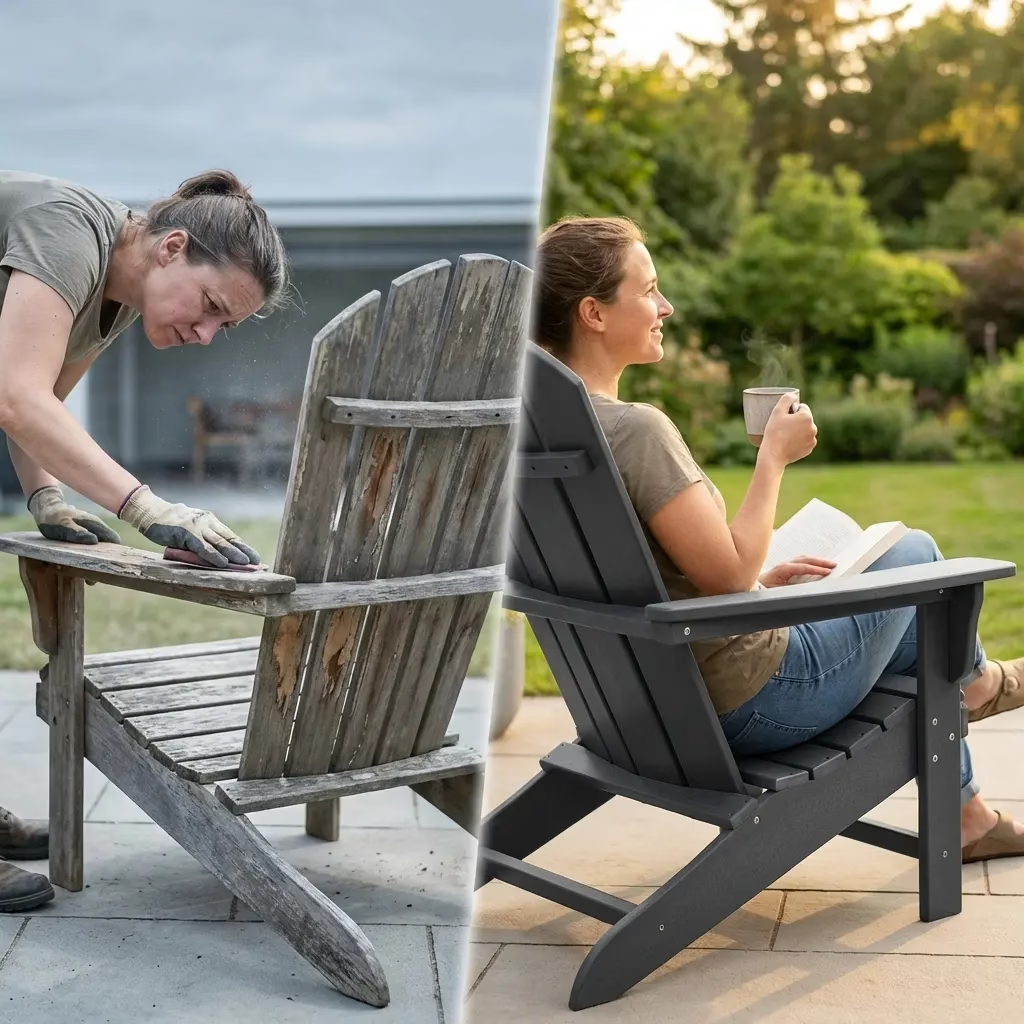
Why Homeowners Are Choosing Low-Maintenance Outdoor Living Over Endless Upkeep
Something shifted in 2025. Homeowners stopped asking “How does it
Learn More
Uncategorized
8min Read
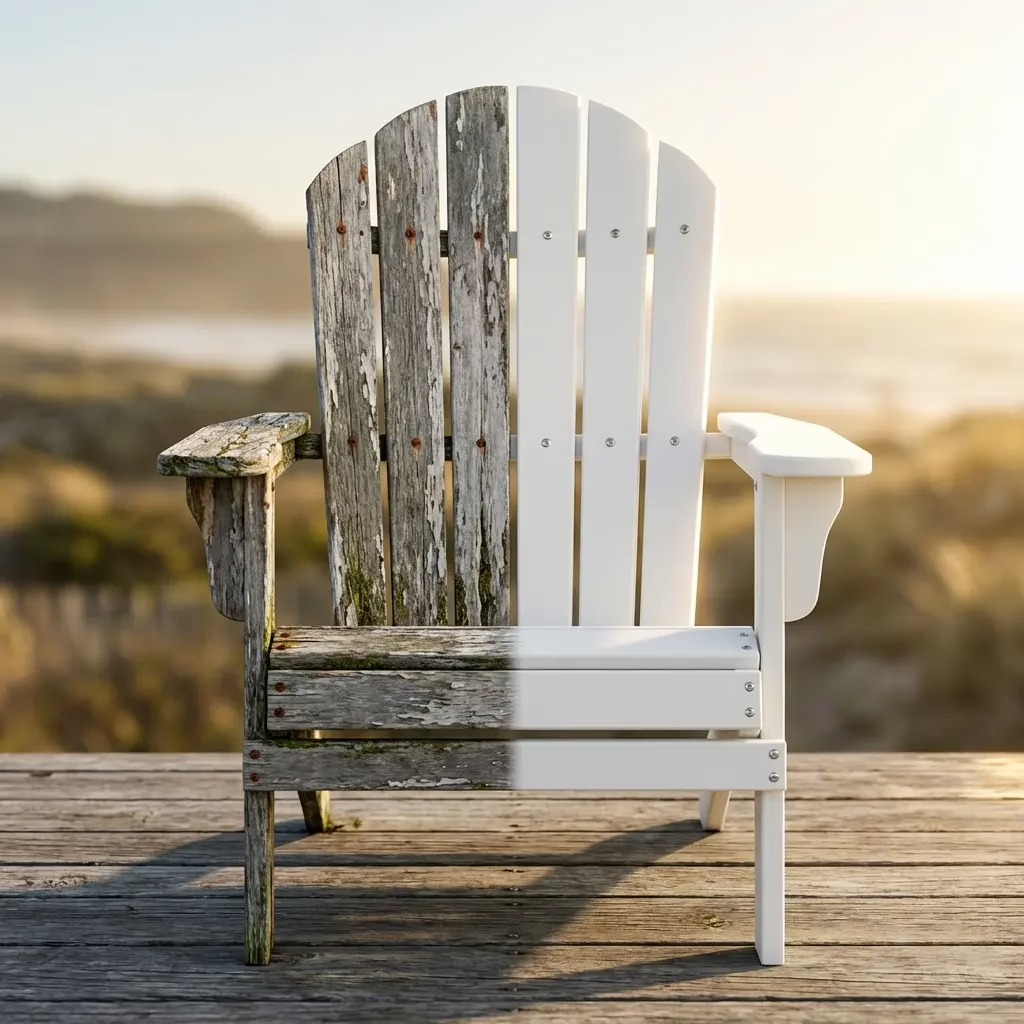
The Outdoor Living Investment Boom: What the Data Reveals About Home Value and Lifestyle Returns
Most homeowners think about outdoor furniture as a purchase. You
Learn More
Uncategorized
8min Read
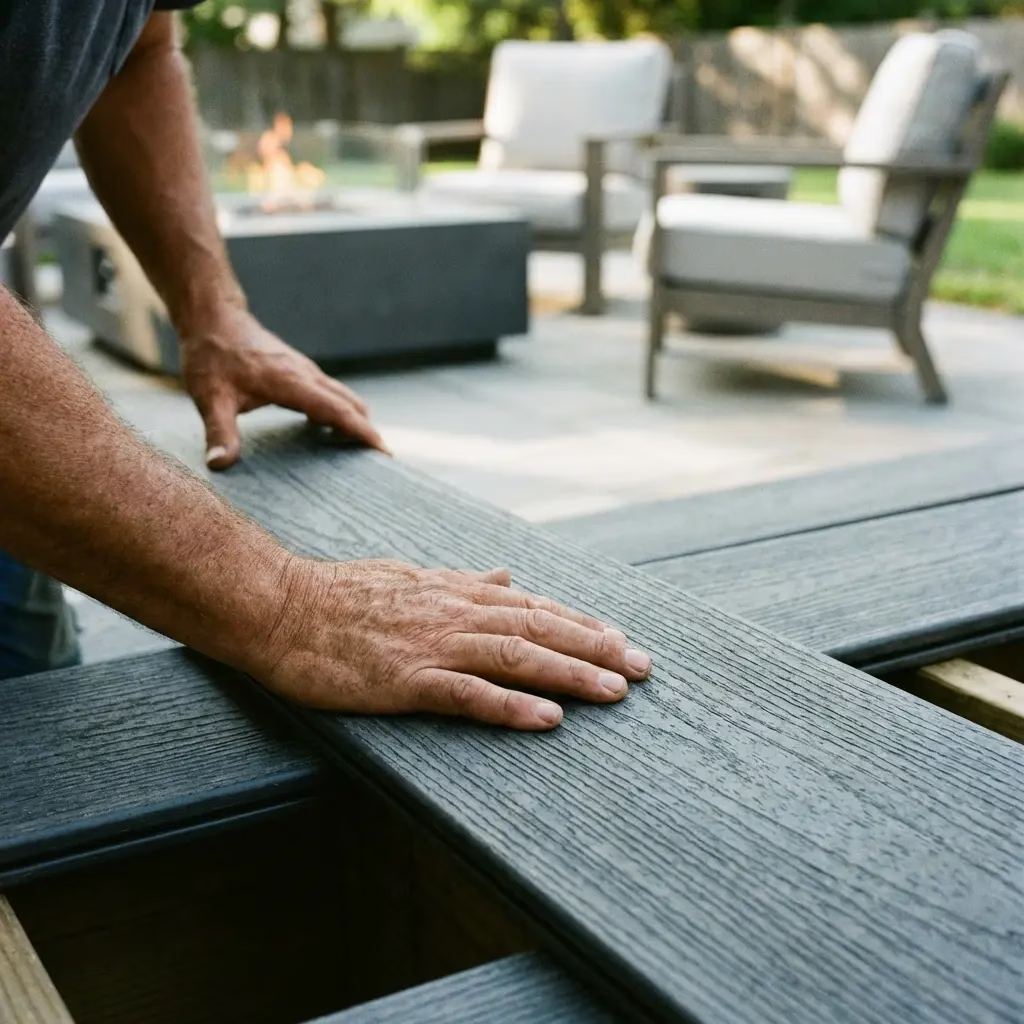
Why Sustainable Materials Are Reshaping Outdoor Living and What It Means for Your Business
When you look at recycled poly lumber transforming the outdoor
Learn More