
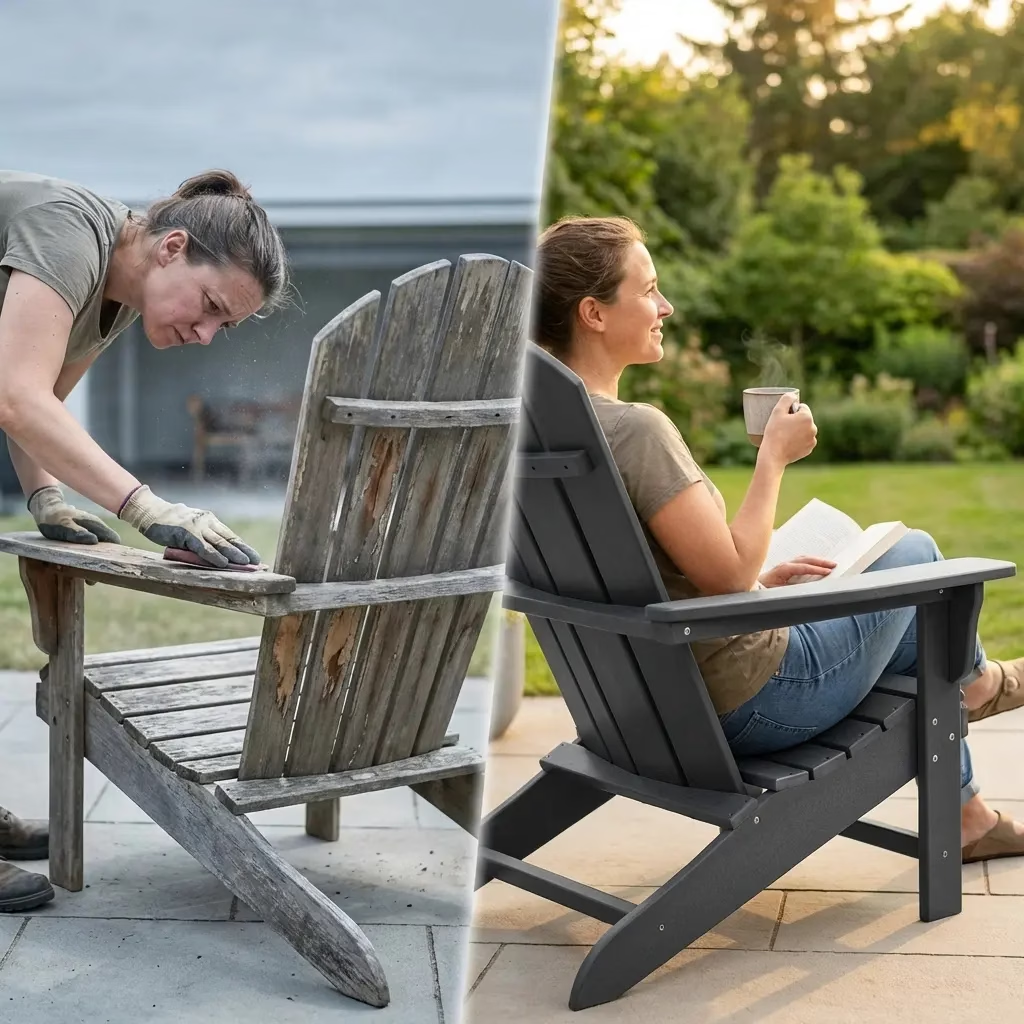
Something shifted in 2025.
Homeowners stopped asking “How does it look?” and started asking “How much time will this steal from my life?”
The numbers tell the story. A recent consumer trend study from the International Casual Furnishings Association found that 67 percent of homeowners now prioritize durability over style when buying outdoor furniture. That’s not a slight preference—that’s a fundamental redefinition of what “quality” means.
And the reason is simple: people are tired of weekends spent maintaining furniture instead of enjoying it.
The Hidden Cost Nobody Talks About
Here’s what most homeowners don’t realize when they buy traditional wood outdoor furniture: they’re underestimating their maintenance burden by threefold.
Americans believe they spend about 14 hours per month on household maintenance tasks. The reality? It’s closer to 42 hours.
That gap represents something bigger than miscalculation. It represents stolen time—weekends that should have been spent with family, mornings that turned into sanding sessions, Saturdays lost to staining and sealing.
When you break down the actual costs, the numbers get uncomfortable fast:
- Materials: $30-$60 per gallon of stain and sealant, plus $15-$25 for cleaning products, repeated every couple of years
- Labor: 8-16 hours annually at a personal time value of $25-$50 per hour
- Professional maintenance: $200-$500 per year if you outsource the work
Over a decade, traditional wood furniture can cost $2,000 to $5,000+ in maintenance alone—before you factor in repairs or premature replacement.
But the financial cost isn’t even the worst part.
The Breaking Point
There’s a moment when the realization hits.
It’s usually a Saturday morning. You had plans to relax on your patio with coffee and a book. Instead, you’re sanding mildew off chairs, scrubbing cushions, or reassembling furniture that didn’t survive another winter.
You look over the fence and see your neighbor enjoying their outdoor space while you’re working on yours—again.
That’s when the math changes from vague effort to real cost.
One homeowner described it perfectly: “I felt guilty using the furniture because I knew I was accelerating the next maintenance cycle.”
Think about that for a second. Outdoor furniture that makes you feel guilty for sitting on it.
That’s not a product problem. That’s a lifestyle problem.
The Mental Load You Can’t Calculate
Survey data shows that 42 percent of homeowners name cleaning and caring for outdoor furnishings as the biggest non-financial barrier to upgrading their outdoor space.
The psychological weight of knowing that maintenance task is always looming turns what should be a relaxing space into another responsibility sitting on your to-do list.
Every spring, it’s there waiting for you.
Every time you use the furniture, you’re aware you’re adding to the next cycle of work.
The constant mental burden competes for the same energy and attention you need for your business, your family, and your actual priorities.
When homeowners switch to low-maintenance options like poly lumber, they describe the relief as immediate. The space becomes something they enjoy without stress—not another project competing for their weekends.
The Generational Shift
Millennials are driving this change, and they’re applying a different logic entirely.
More millennials install outdoor kitchens (22 percent) than Gen-Xers (15 percent) and baby boomers (8 percent). And 76 percent of millennials plan to purchase outdoor furniture, with 39 percent planning to buy multiple pieces.
But here’s what’s different: they’re treating outdoor spaces as extensions of their living rooms, not seasonal luxuries.
They’re applying the same expectation they have for indoor furniture: stable, comfortable, and largely hands-off once it’s set up.
The frustration hits when they realize traditional materials demand yearly care that no indoor sofa or dining table ever would. That disconnect creates disappointment because it breaks the promise of convenience they associate with modern living.
Instead of enhancing their lifestyle, the furniture introduces friction.
Once they recognize that mismatch, their mindset shifts quickly toward materials that align with indoor standards of durability and ease.
The ROI Calculation That Changes Everything
Smart homeowners think like entrepreneurs: they calculate return on investment.
Traditional wood furniture might cost less upfront, but over time it costs far more in both money and effort. Wood typically lasts 5-10 years without significant upkeep, while poly lumber furniture can last 20+ years with almost no maintenance.
Here’s the real math:
Traditional wood over 10 years: Initial cost + hundreds in annual maintenance + replacement costs = several thousand dollars and countless lost weekends
Poly lumber over 10 years: Higher initial cost + virtually zero maintenance + no replacement needed = lower total cost and zero stolen Saturdays
When you calculate cost per year of ownership, the “expensive” poly lumber investment becomes the budget-friendly choice.
It’s the same principle we teach at Revival of Revenue about building sustainable business systems: invest in what lasts, not what fails fast.
Why Material Alone Isn’t Enough
Low-maintenance material solves weather resistance. But how the furniture is built determines whether it holds up for decades or slowly loosens and fails.
Mass-produced poly furniture often relies on thinner profiles and shortcuts to reduce cost. The result? Movement and wear even if the material itself doesn’t rot.
The failure points homeowners try to avoid are specific and painful:
- Joints loosening
- Screws pulling out
- Frames sagging
- Boards cracking or warping under weight and weather
With cheap poly furniture, the most common problem isn’t rot—it’s structural collapse. Thin boards flex, connections loosen, and the piece starts to feel unstable after a few seasons.
Traditional building techniques like precise joinery, reinforced stress points, and solid structural design prevent these failures. Amish builders treat poly lumber the way fine wood furniture is treated, creating pieces that feel substantial, stay tight, and age with stability instead of slowly falling apart.
When homeowners see “lifetime warranty” paired with Amish craftsmanship, they’re looking for reassurance that the furniture is built with real structure—not just durable plastic.
What “Quality” Means Now
Five years ago, “quality” outdoor furniture meant beautiful teak or cedar with rich grain and traditional joinery.
In 2025, homeowners measure quality by three different criteria:
First: Durability and weather resistance. Materials that stand up to sun, moisture, and seasonal temperature swings without cracking or warping. People don’t want pieces that fail after one year.
Second: Low maintenance. Furniture that resists fading, mildew, and wear without constant cleaning and sealing. Research shows durability and practicality are dominating purchase decisions—over 50 percent of consumers prioritize durability, with 77 percent expressing dissatisfaction with short-lived outdoor furniture.
Third: Comfort and functionality. Ergonomic designs and weather-resistant cushions that match indoor standards while still performing outdoors.
Quality now blends performance with livability in a way that would have been unexpected five years ago.
The Market Responds
This isn’t just a trend. It’s a market signal.
The global outdoor furniture market was valued at $50.73 billion in 2023 and is projected to grow to $81.44 billion by 2032, with a yearly growth rate of 5.45 percent.
That’s millions of homeowners voting with their wallets for furniture that works smarter, not harder.
The outdoor furniture revolution mirrors the entrepreneurial revolution: reject broken systems, embrace solutions that scale.
The Sustainability Bonus
Each poly lumber piece keeps around 500 plastic containers out of landfills. The durability means chairs can last for over 20 years under normal conditions, maintaining their strength and appearance.
This creates a triple win: environmental responsibility, financial wisdom, and lifestyle freedom.
It’s the entrepreneurial approach to outdoor furniture—one smart investment that keeps delivering returns year after year.
What This Means for Your Space
The shift toward low-maintenance outdoor living reflects something bigger than furniture preferences.
It reflects changing priorities around time, family, and how we want to spend our lives.
When you choose furniture that doesn’t steal your weekends, you’re choosing to invest in moments that matter—not maintenance that doesn’t.
You’re choosing to enjoy your outdoor space without stress, guilt, or the constant awareness of work waiting for you.
You’re choosing furniture that enhances your lifestyle instead of introducing friction.
And you’re making the same kind of smart, long-term investment decision that successful entrepreneurs make every day: pay once, benefit for decades.
Because at the end of the day, your outdoor space should be a place you enjoy—not another project on your to-do list.
We believe in creating furniture that fosters connections and enhances moments spent outdoors. Our Amish-crafted poly lumber pieces blend timeless craftsmanship with modern durability, so you can spend your time living—not maintaining.
Your outdoor space is waiting. And it shouldn’t require a maintenance schedule to enjoy it.
Related Posts
View All
Uncategorized
5min Read
Why Homeowners Are Choosing Low-Maintenance Outdoor Living Over Endless Upkeep
Something shifted in 2025. Homeowners stopped asking “How does it
Learn More
Uncategorized
5min Read
The Outdoor Living Investment Boom: What the Data Reveals About Home Value and Lifestyle Returns
Most homeowners think about outdoor furniture as a purchase. You
Learn More
Uncategorized
5min Read
Why Sustainable Materials Are Reshaping Outdoor Living and What It Means for Your Business
When you look at recycled poly lumber transforming the outdoor
Learn More