0
Poly Furniture
Poly Outdoor Furniture: Winter Care and Storage Guide
By Scott
August 4, 2026
Share:
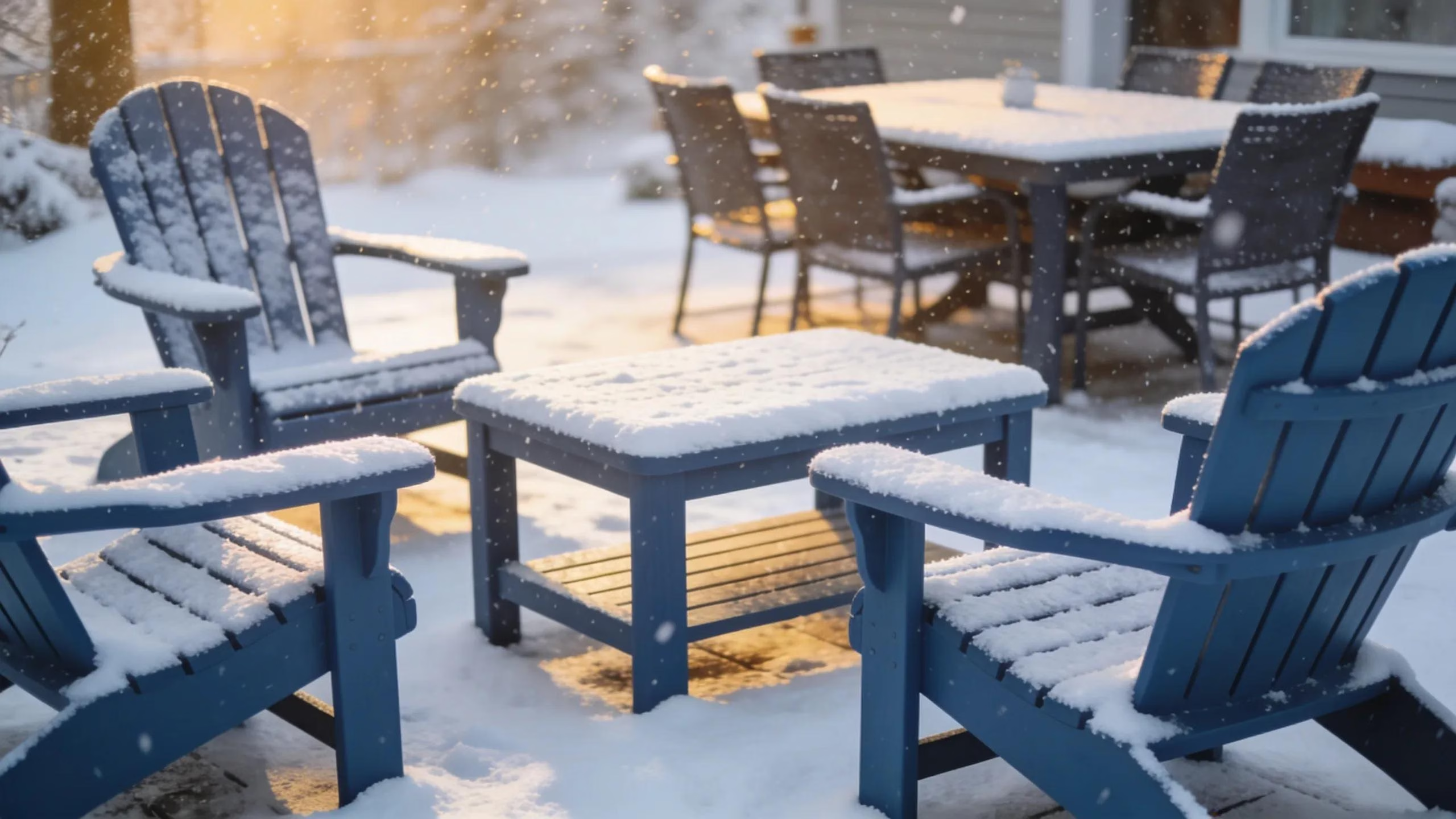
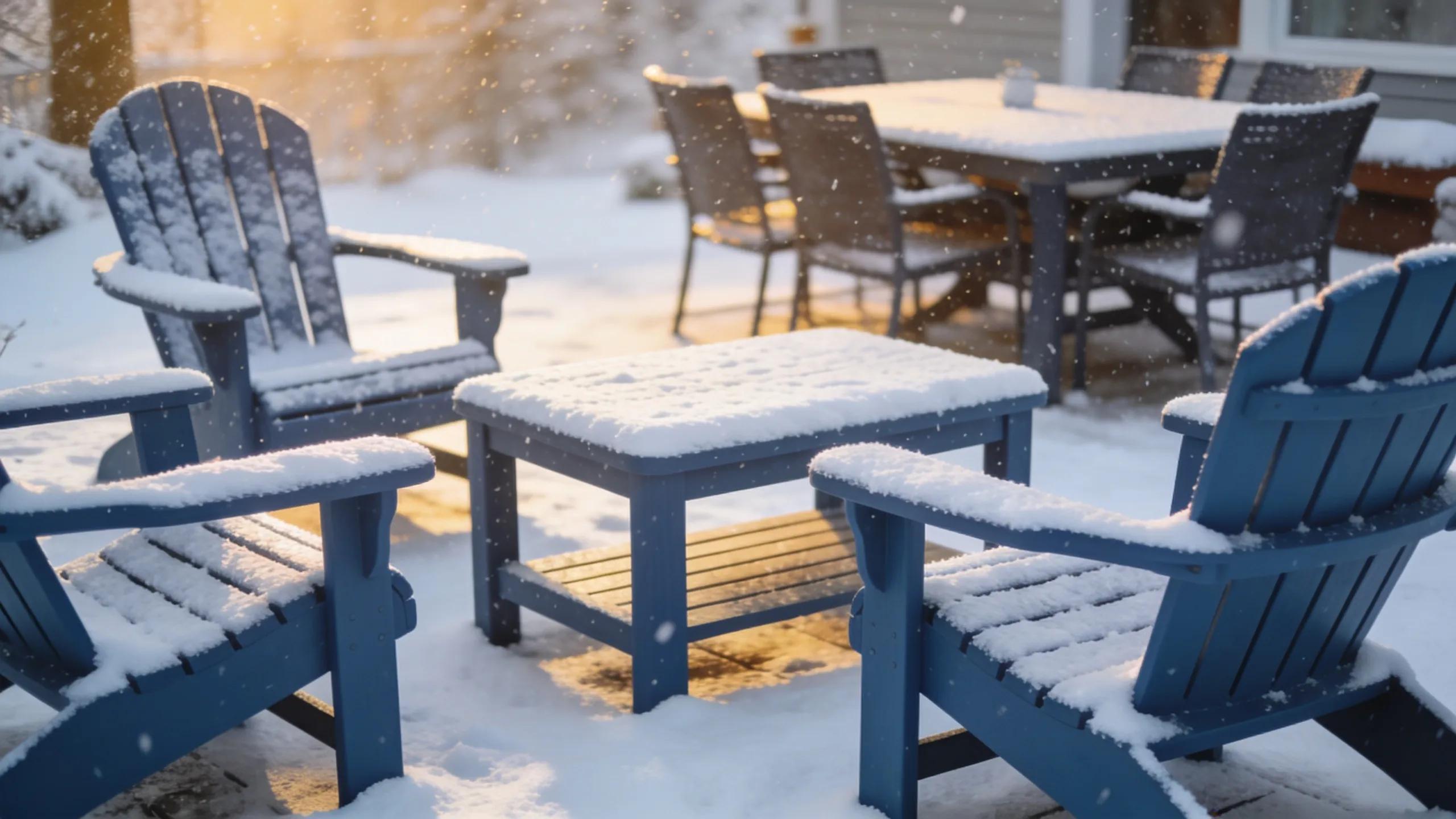
Here’s something most homeowners in Iowa, Wisconsin, Minnesota, and across the Midwest don’t realize until after they’ve spent a Saturday hauling furniture into the garage: you probably didn’t need to do that. Poly outdoor furniture — built from high-density polyethylene (HDPE) — is engineered to stay outside year-round, through sub-zero temperatures, heavy snow loads, and freeze-thaw cycles that would destroy wood or corrode metal in a season or two.
That doesn’t mean there are zero things to consider before winter arrives. But the conversation around winter storage tips for poly outdoor furniture is fundamentally different from the one you’d have about a teak dining set or a wrought-iron glider. Understanding that difference is the first step to getting the most out of your investment — and to reclaiming your Saturday.
Why Poly Is Different From Wood and Metal in Cold Weather
Most outdoor furniture struggles in winter for one of two reasons: moisture absorption or oxidation. Wood expands and contracts as it absorbs and releases water, leading to cracking, splitting, and rot. Metal — particularly steel and aluminum — is vulnerable to rust, surface corrosion, and paint failure when exposed to road salt, ice melt, and prolonged moisture.
HDPE poly furniture sidesteps both problems entirely. The material is non-porous, meaning it does not absorb moisture. Freeze-thaw cycles that split wood joints have no effect on poly because there is no moisture trapped inside the material to expand. The color in HDPE furniture is integral to the material — it runs all the way through — so there is no surface coating to crack, peel, or oxidize the way painted metal does.
At the molecular level, HDPE remains stable at temperatures well below freezing. It won’t become brittle in the cold the way some lesser plastics do. The UV stabilizers built into quality HDPE formulations protect against sun damage during summer months, and those stabilizers remain effective regardless of what the thermometer reads in January in Minnesota or Michigan.
The practical result: poly outdoor furniture does not require winter storage. It is one of the genuine functional advantages the material offers over both wood and traditional metal furniture — and it’s an advantage that pays off every single winter.
Part 1: Leaving Your Poly Furniture Outside — What’s Safe and What to Expect
Leaving poly furniture outside through a Midwest or Northern winter is not just acceptable — for most homeowners, it’s the right call. Here is what you can reasonably expect when you do.
Snow and ice accumulation will rest on the furniture surfaces without causing damage. Brushing off heavy snow loads is a reasonable precaution — not because the weight will harm the poly, but because it reduces stress on joints and hardware over time. A soft broom or brush does the job without scratching the surface.
Color and finish will remain intact through the winter. Because HDPE color is not a surface coat, there is nothing to chip, fade, or peel from cold exposure. You may notice a very slight change in surface appearance in extreme cold — this is temporary and resolves as temperatures rise. It is not structural damage.
Hardware — typically stainless steel or galvanized fasteners on quality poly furniture — is selected specifically to hold up in outdoor conditions. If your furniture uses inferior hardware, those fasteners are the one area to watch, not the poly itself.
Cushions are the exception. If your poly furniture includes cushions with fabric covers, those should be removed and stored indoors or in a breathable storage bag. Fabric holds moisture, and prolonged damp exposure through a Wisconsin or Iowa winter will lead to mildew. The furniture itself stays outside; the cushions come in.
What you don’t need to do: cover it with tarps, apply seasonal treatments, bring it inside, or do anything else. HDPE furniture is not high-maintenance. That is a feature, not a coincidence.
Leaving Your Poly Furniture Outdoors: Durability and Expectations
Some homeowners prefer to store their poly furniture during the winter months — to keep it clean and ready for spring, to free up outdoor space, or simply out of habit. That’s a perfectly reasonable choice, and if you’re going to store it, a few straightforward practices will make the process efficient and keep the furniture in top condition.
Clean before you store. Use mild soap and warm water with a soft cloth or brush. Remove any surface dirt, pollen residue, or staining from the season. Rinse thoroughly and — critically — allow everything to dry completely before it goes into storage. Sealing moisture inside a covered space is the one scenario where mold or mildew could become an issue even with poly furniture.
Store in a dry, covered space. A garage, barn, or covered outbuilding works well. If you’re stacking chairs, use furniture pads or old towels between pieces to prevent surface scratching. Most Adirondack chairs and dining chairs are stackable; check the manufacturer’s guidance for your specific pieces.
Use breathable covers if storing outdoors. If you’re covering furniture on a porch or patio rather than moving it to an enclosed space, use breathable furniture covers rather than solid tarps. Non-breathable covers trap condensation, which is exactly what you’re trying to avoid. A breathable cover lets any moisture that does accumulate escape rather than sitting on the surface.
No treatments needed before storage. Unlike teak or cedar, HDPE poly does not benefit from oil treatments, sealants, or protective sprays before winter. Applying these products to poly can actually leave residue that is harder to clean in the spring. Store it clean, store it dry, and that’s sufficient.
Spring startup is simple. When you’re ready to bring furniture back out, wipe it down and it’s ready. There’s no reconditioning, no re-staining, no hardware inspection for rust. That simplicity is part of what makes poly outdoor furniture a practical long-term investment.
A Note for Lake and Vacation Property Owners
If you’re closing a cabin in northern Wisconsin, a lake house on one of Minnesota’s 10,000 lakes, or a vacation property in Michigan’s Upper Peninsula, poly outdoor furniture deserves specific consideration in your end-of-season checklist — and not much of it.
For properties where you won’t be back until Memorial Day weekend, the practical question isn’t whether poly can survive the winter outside (it can). The question is what condition you want it in when you return. A quick pre-close cleaning and some common sense about cushion storage is really the full extent of the task.
If your property is in an area with extreme wind exposure — an open shoreline, a hilltop deck — consider stacking chairs and securing them or moving them to a covered porch rather than leaving them freestanding. This is a wind precaution, not a cold-weather precaution.
If you use ice melt or road salt around walkways near your furniture, rinse the furniture down before you leave. Salt residue sitting on any material — including poly hardware and joints — for five or six months is worth cleaning off. A quick rinse at closing takes two minutes.
Beyond those items, vacation property owners closing for the season can check poly furniture off their list quickly. It’s one of the genuinely low-effort items in a close-up that has plenty of higher-priority tasks competing for your attention.
Winter Comparison: Poly vs. Wood vs. Metal
| | Poly (HDPE) | Wood (Teak / Cedar) | Metal (Steel / Aluminum) |
|---|---|---|---|
| Moisture absorption | None — non-porous | High — absorbs and releases water | Surface-level — prone to corrosion |
| Freeze-thaw damage | Not susceptible | Cracking, splitting, joint failure | Paint cracking, corrosion at seams |
| Winter storage required? | No | Strongly recommended | Recommended |
| Pre-storage treatment | Not needed | Oil/sealant application | Rust inhibitor recommended |
| Spring prep | Wipe down and use | Sand, re-seal, or refinish | Inspect, touch up rust spots |
| Hardware vulnerability | Low (stainless/galvanized) | Moderate (moisture + wood movement) | High (rust, corrosion) |
| Lifespan with proper care | 20+ years | 10–15 years (with maintenance) | 5–15 years (varies by metal) |
The comparison above reflects what homeowners in Iowa, Illinois, Indiana, and across the Northern US typically deal with over a decade of furniture ownership. The maintenance difference compounds over time — and it’s one reason poly outdoor furniture tends to pay for itself when you factor in replacement and upkeep costs.
Outdoor Furniture Winter Tips: A Quick Reference for Midwest Homeowners
Before the first hard freeze, run through this short checklist for your poly furniture:
- Remove and store cushions indoors or in a breathable storage bag
- Brush off heavy snow accumulation with a soft broom as needed through the winter
- Rinse off ice melt or road salt residue if those products are used near the furniture
- Stack and secure freestanding chairs if wind exposure is a factor at your property
- Clean thoroughly if storing — let everything dry before covering or enclosing
- Skip the treatments — no oils, sealants, or sprays needed on HDPE
That’s the full list. For most homeowners in Iowa, Wisconsin, Minnesota, Michigan, Illinois, and Indiana, winterizing patio furniture made from poly is a 20-minute task, not a Saturday project.
Timbercraft Poly builds Amish-crafted HDPE outdoor furniture from our workshop in Kalona, Iowa — made to last through Midwest winters without fuss. If you have questions about care, storage, or which pieces are right for your space, reach out at [email protected] or call us at 319-591-1112. You can browse the full collection at timbercraftpoly.com.
Why Schedule a Call?
Popular Insights

How To Choose Outdoor Dining Table Size
Sep. 02, 2026
5 Things to Look for When Buying Poly Outdoor Furniture
Sep. 02, 2026
How to Clean Poly Outdoor Furniture (Step-by-Step Guide)
Aug. 06, 2026Winter Storage Tips for Poly Outdoor Furniture: What You Actually Need to Know
Aug. 04, 2026
10 Best Patio Furniture Ideas for Small Spaces
Aug. 01, 2026Our Categories