0
Outdoor Furniture
How to Clean Poly Outdoor Furniture (Step-by-Step Guide)
By Scott
August 6, 2026
Share:
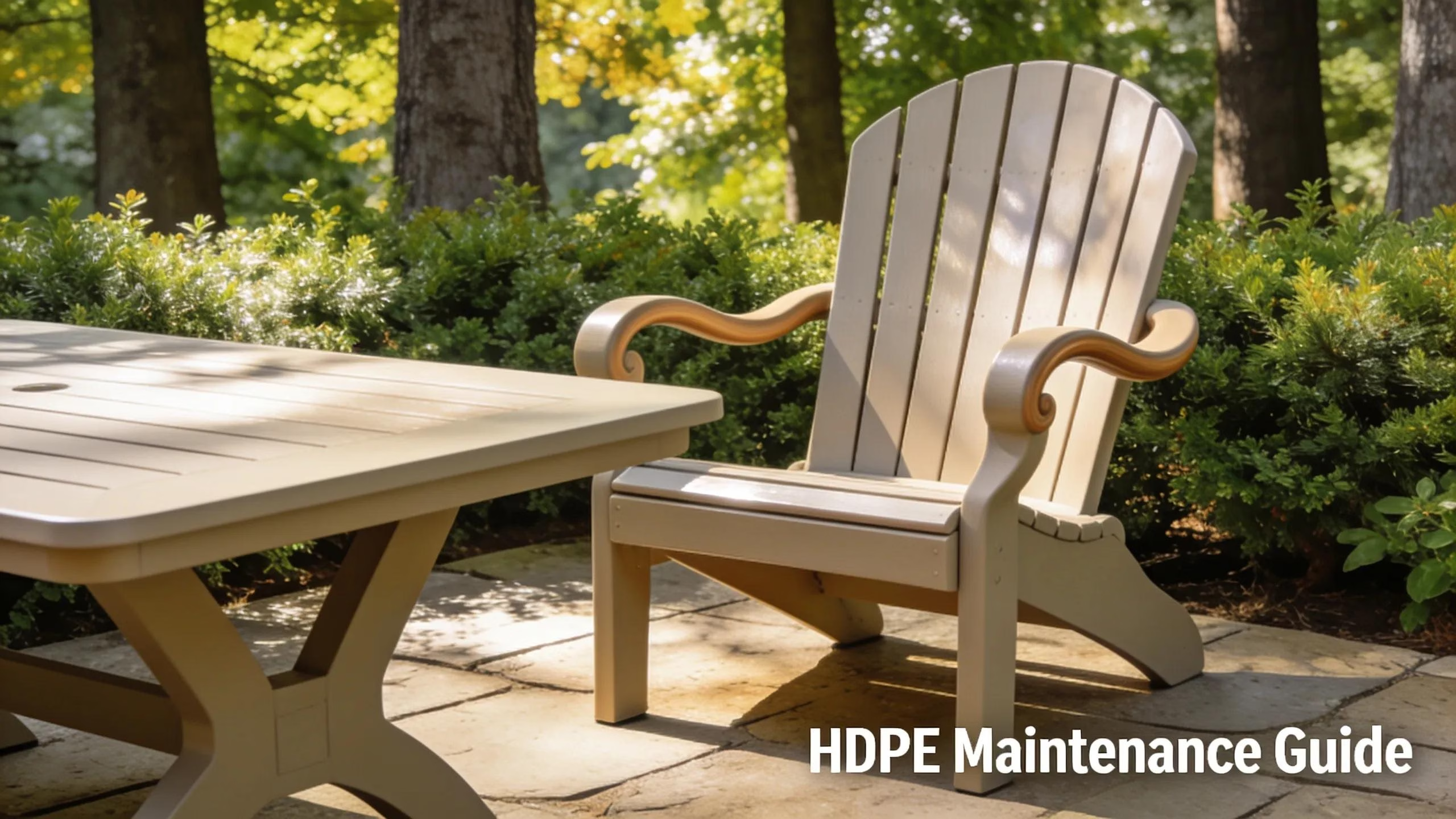
One of the most compelling reasons homeowners choose poly outdoor furniture is its remarkably low maintenance requirement. Unlike traditional wood, which demands sanding, staining, and sealing year after year, poly lumber – made from recycled high-density polyethylene (HDPE) – holds its color, resists moisture, and shrugs off the elements with minimal intervention. That said, “low maintenance” does not mean “no maintenance.” Periodic cleaning keeps your investment looking its best season after season.
This guide walks you through everything you need: the right supplies, a routine cleaning routine, a deeper clean for stubborn stains and mildew, and a quick reference on what is safe to use – and what to avoid – on poly wood furniture.
Essential Tools and Supplies for Cleaning Poly Furniture
Before you begin, gather the following tools and supplies. Having everything on hand makes the process faster and prevents you from improvising with cleaners that could damage the finish.
Tools
- Garden hose or bucket of water
- Soft-bristle scrub brush
- Soft cloths or microfiber towels
- Sponge
- Old toothbrush (for grooves and hardware)
Cleaning Supplies
- Mild dish soap (Dawn or equivalent)
- White vinegar
- Baking soda
- Commercial HDPE or poly furniture cleaner (optional)
- Spray bottle
Avoid: bleach, abrasive scrubbers, steel wool, and high-pressure washers. These can scratch or dull the surface of your poly lumber. More on this in the Safe vs. Avoid table below.
Routine Cleaning: Step-by-Step
For most homeowners, a routine clean two to four times per season is all that is needed to keep poly wood furniture looking sharp. This process takes about 15–20 minutes per piece.
Step 1: Remove Loose Debris
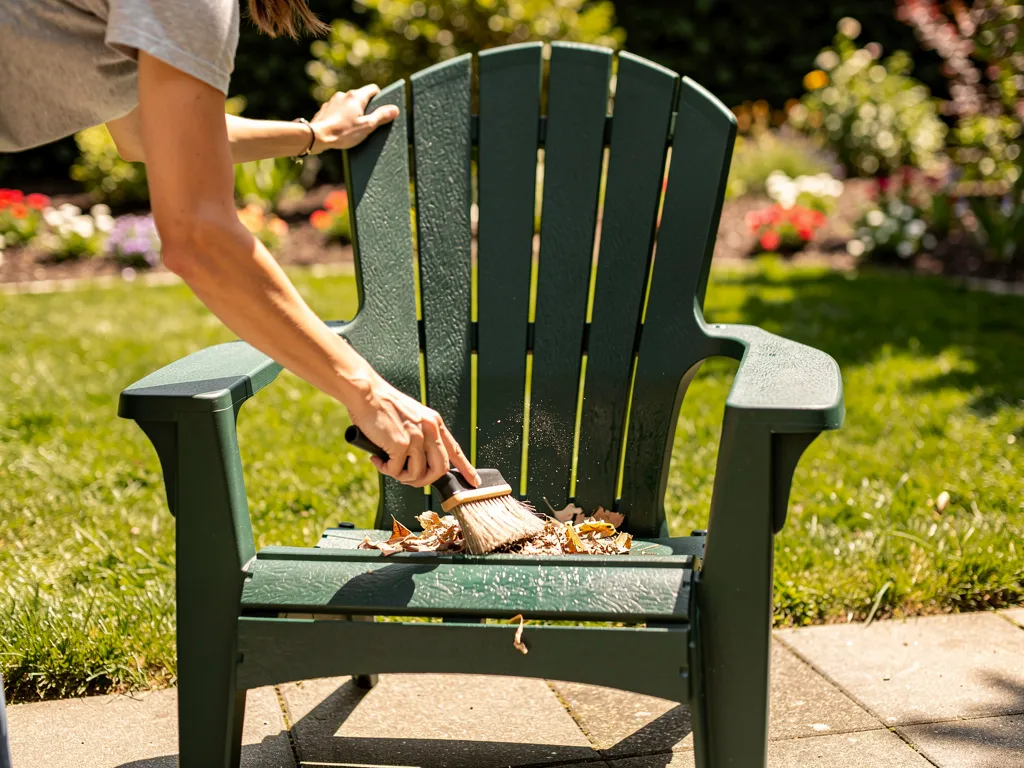
Use a dry soft cloth or soft-bristle brush to sweep away leaves, dust, pollen, and loose dirt from all surfaces, including undersides, slats, and the spaces between boards. For poly outdoor chairs like Adirondack styles, pay particular attention to the wide armrests and the grooved seat slats where debris tends to collect.
Step 2: Prepare Your Cleaning Solution
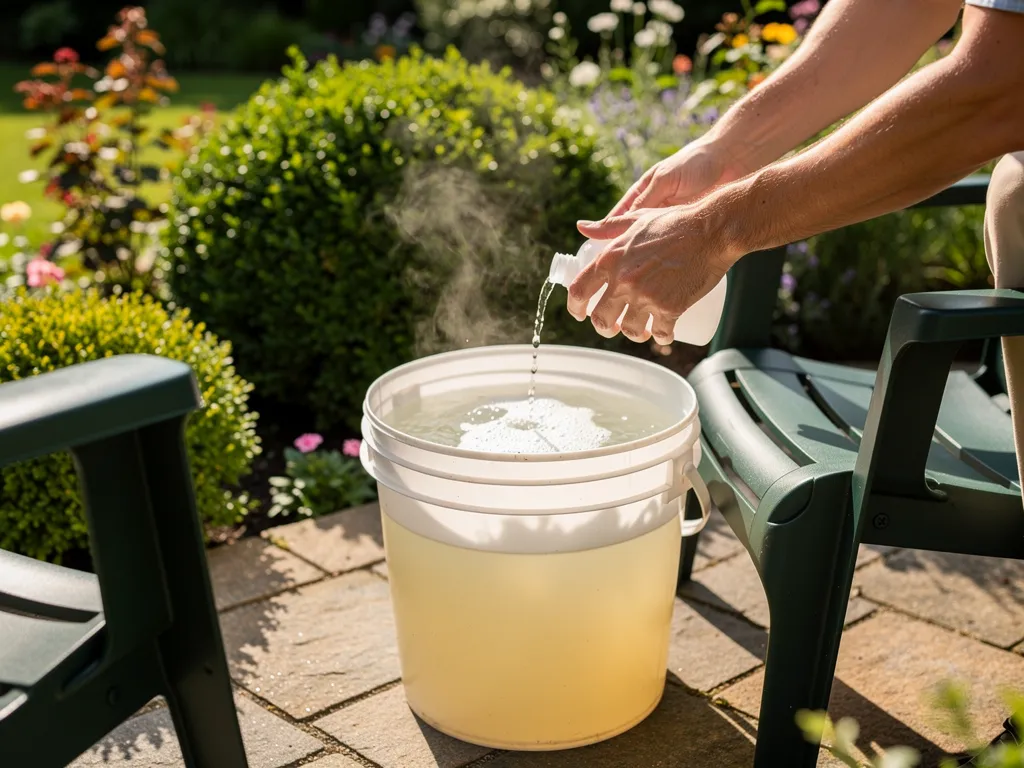
Fill a bucket with warm water and add a few drops of mild dish soap. Stir gently until the water is slightly sudsy. You do not need a heavy concentration, a light soap solution is effective and rinses cleanly.
Step 3: Wash All Surfaces
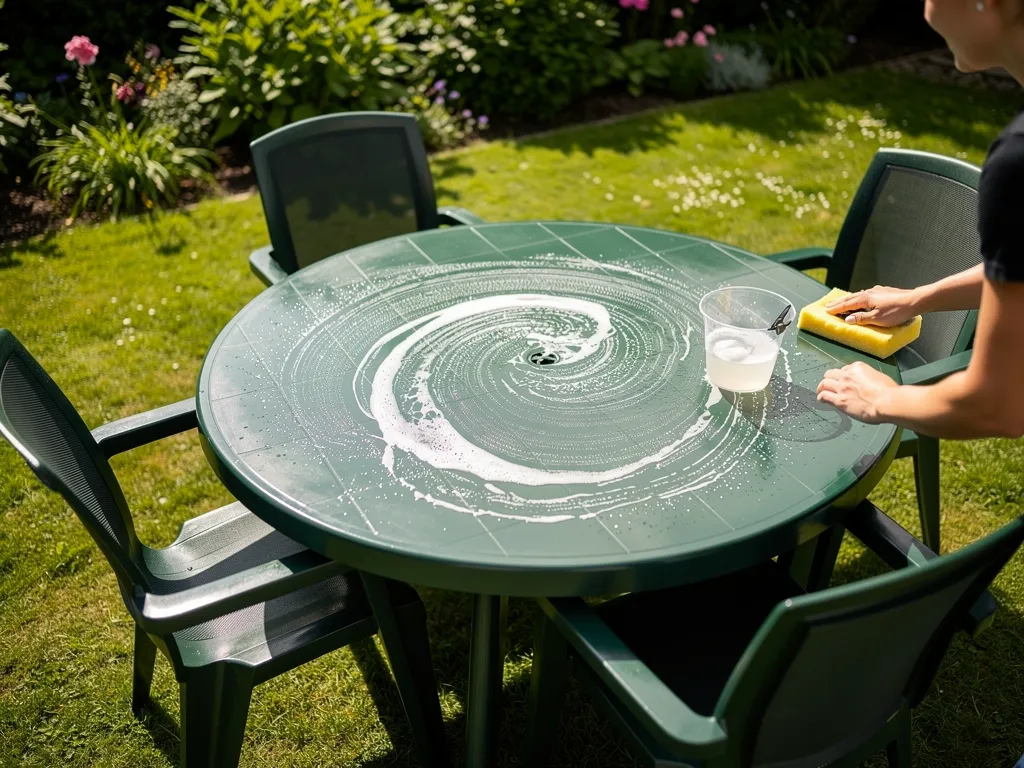
Dip your soft cloth or sponge into the soapy water and wipe down every surface of the furniture. Work from the top down so that loosened dirt falls away from already-cleaned areas. For textured or grooved surfaces – common on poly lumber table sets and slatted benches – use your soft-bristle brush to work the solution into the grooves.
Step 4: Rinse Thoroughly
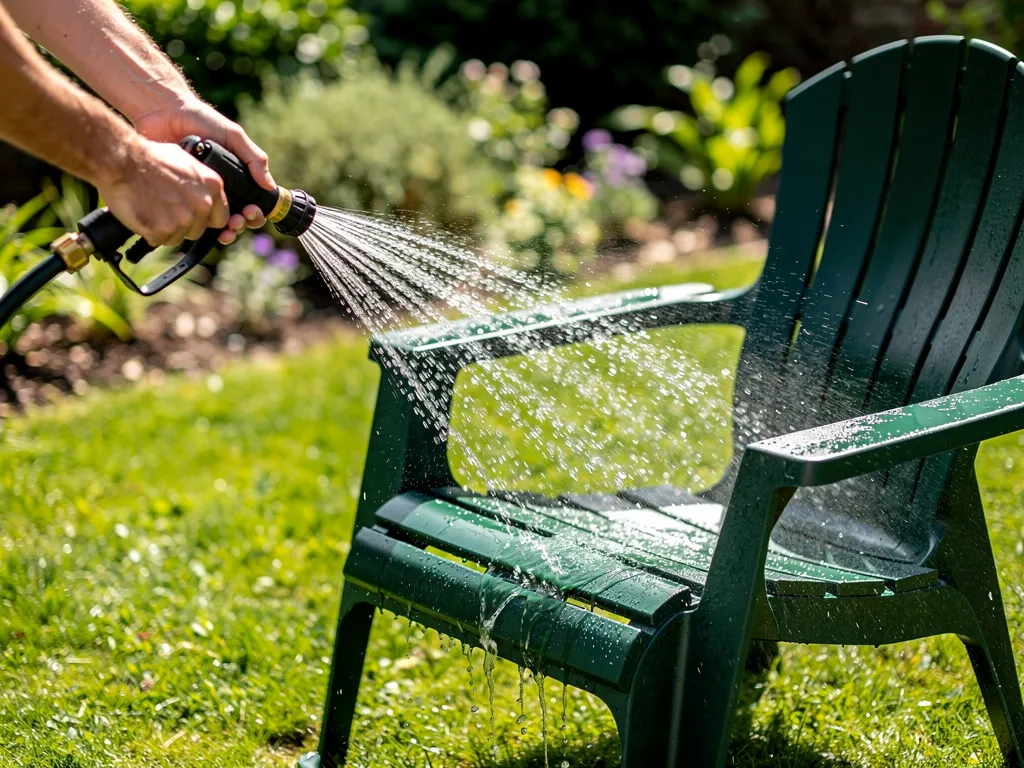
Rinse all surfaces with clean water from a garden hose or a bucket of fresh water. Make sure no soap residue remains, as dried soap can leave a film that attracts dirt faster.
Step 5: Dry the Furniture
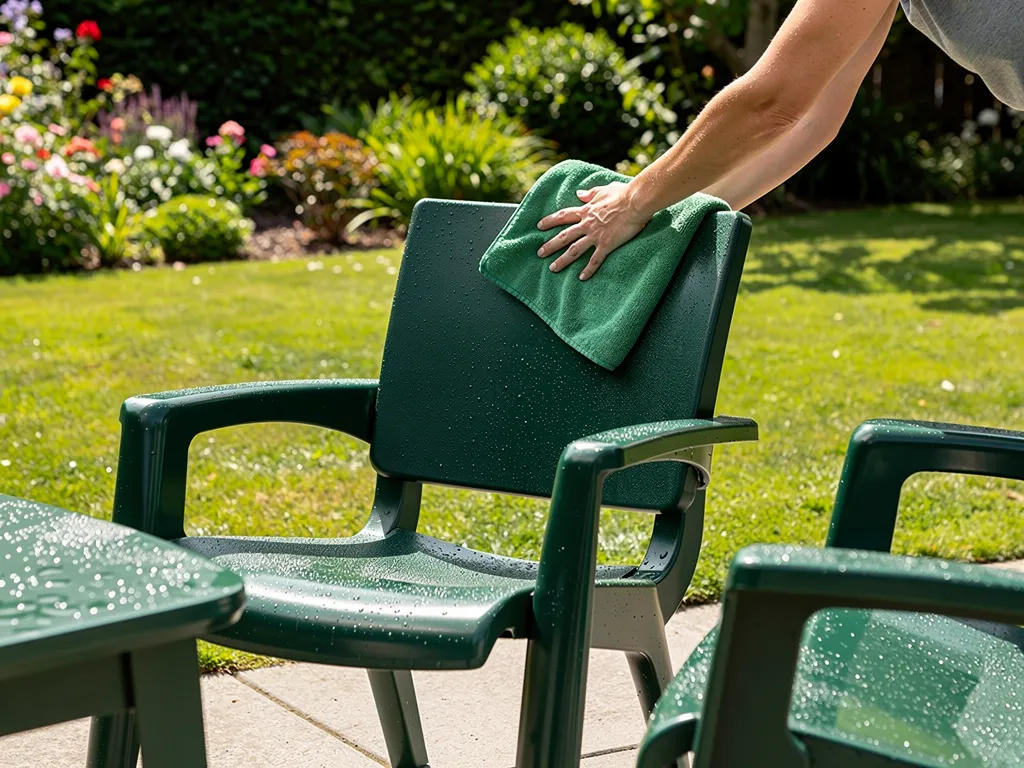
Wipe down surfaces with a dry microfiber towel or allow the furniture to air dry completely in a sunny spot. Avoid stacking or covering furniture while it is still wet, as trapped moisture can encourage mildew growth in cushion gaps or hardware joints.
Deep Cleaning for Stains and Mildew: Step-by-Step
Even the most weather-resistant poly furniture can develop stubborn stains, algae streaks, or mildew patches – especially in humid climates, shaded yards, or after a long winter in storage. This deep-clean process targets those issues directly.
Step 1: Identify the Problem Area
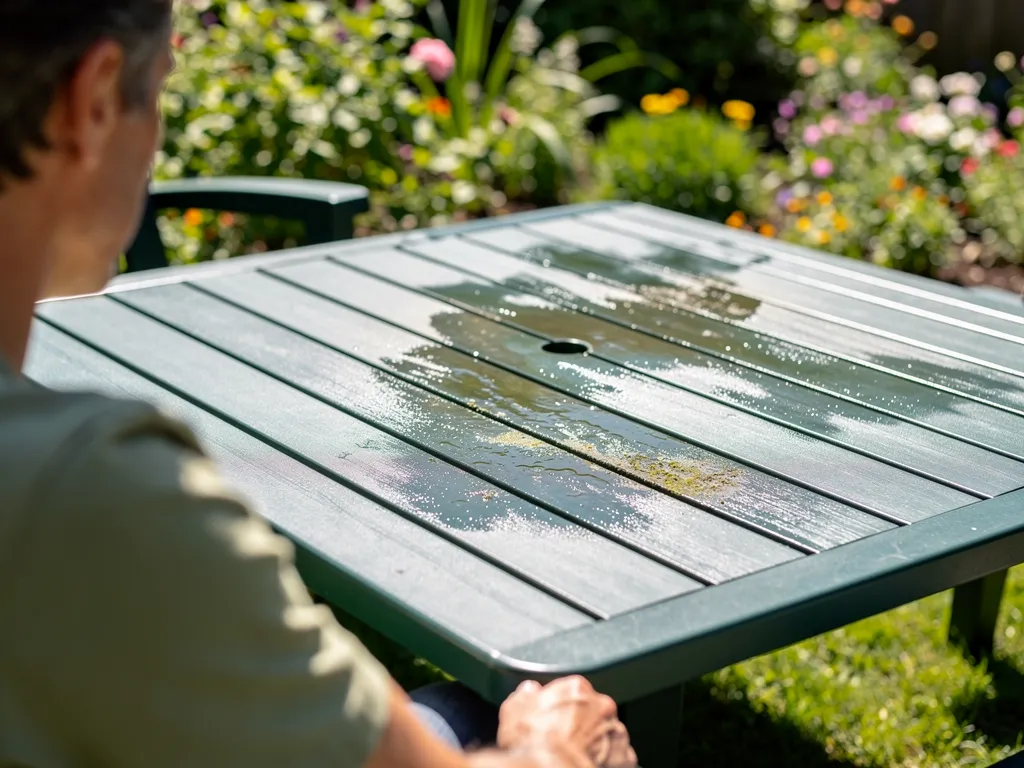
Inspect the furniture in good lighting. Common issues include:
- Green or black streaks: algae or mildew, typically on horizontal surfaces or around hardware
- Water stains or mineral deposits: white or chalky residue from hard water or sprinkler systems
- Food or beverage stains: common on poly outdoor tables used for dining
Step 2: Apply a Vinegar Solution for Mildew and Algae
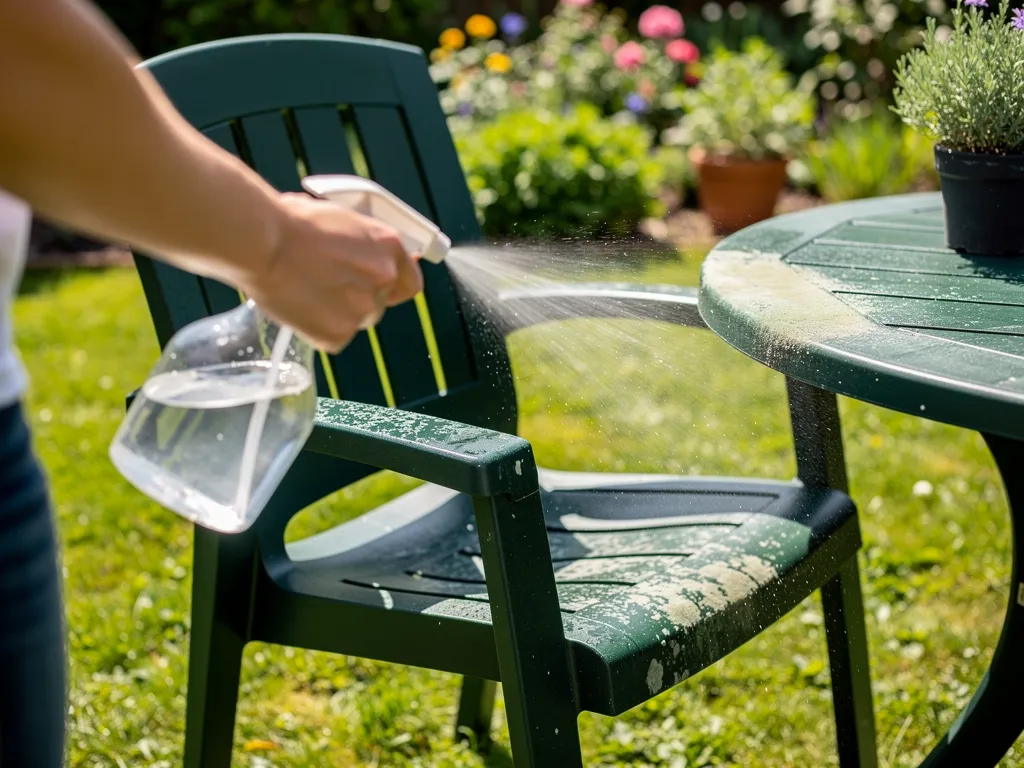
Mix equal parts white vinegar and water in a spray bottle. Spray the affected areas generously and allow the solution to sit for 5–10 minutes. The mild acidity of vinegar breaks down mildew and algae without harming the HDPE surface.
For removing mildew from poly furniture in particularly stubborn cases, apply the solution a second time and allow it to dwell longer before scrubbing.
Step 3: Scrub with a Soft-Bristle Brush
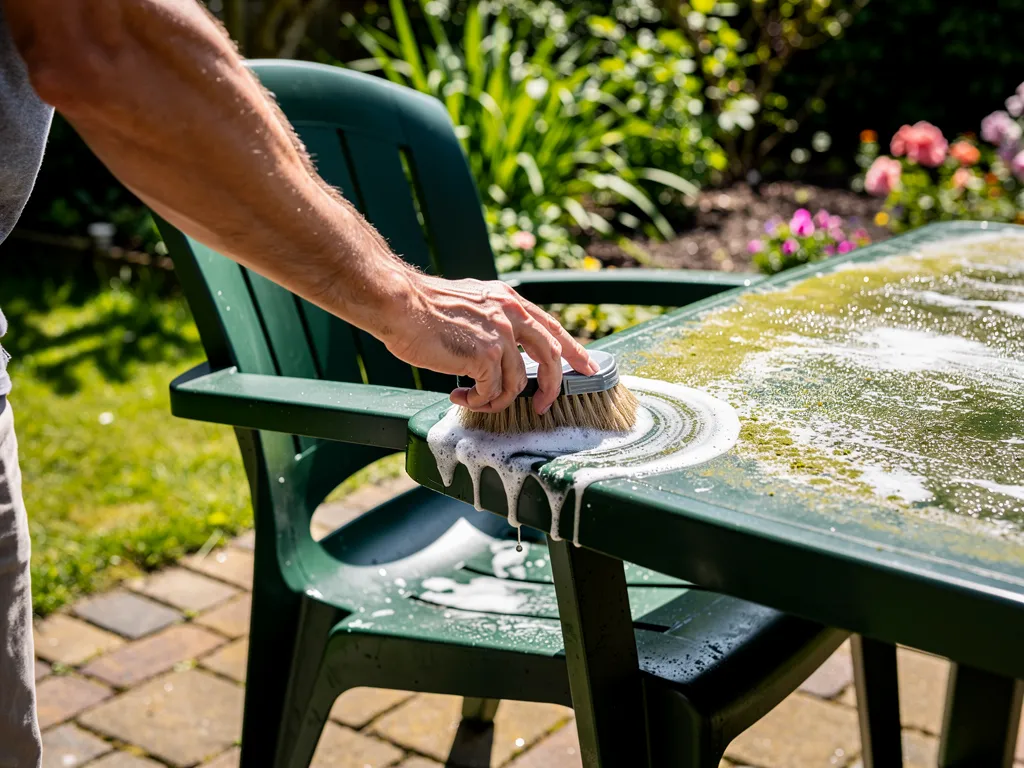
Using a soft-bristle brush, scrub the treated area in a circular motion. Apply moderate pressure – you want to lift the growth without scratching the surface. Use an old toothbrush to reach into hinges, joints, and hardware on poly outdoor swings or porch furniture with moving parts.
Step 4: Treat Tough Stains with a Baking Soda Paste
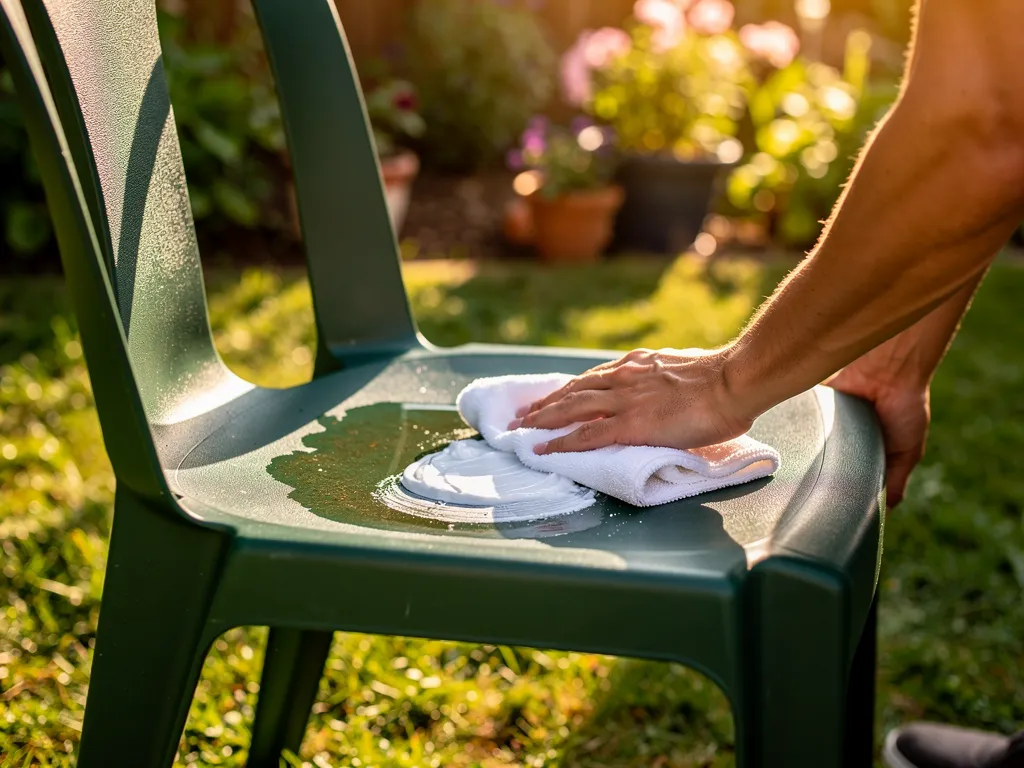
For stains that do not respond to the vinegar solution, grease, dried food, or discoloration, mix baking soda with just enough water to form a thick paste. Apply the paste directly to the stain and allow it to sit for 5 minutes. Gently scrub with a soft cloth or sponge, then rinse clean. Baking soda is a mild abrasive that is safe for poly lumber and will not scratch the surface when applied with a soft applicator.
Step 5: Rinse and Inspect
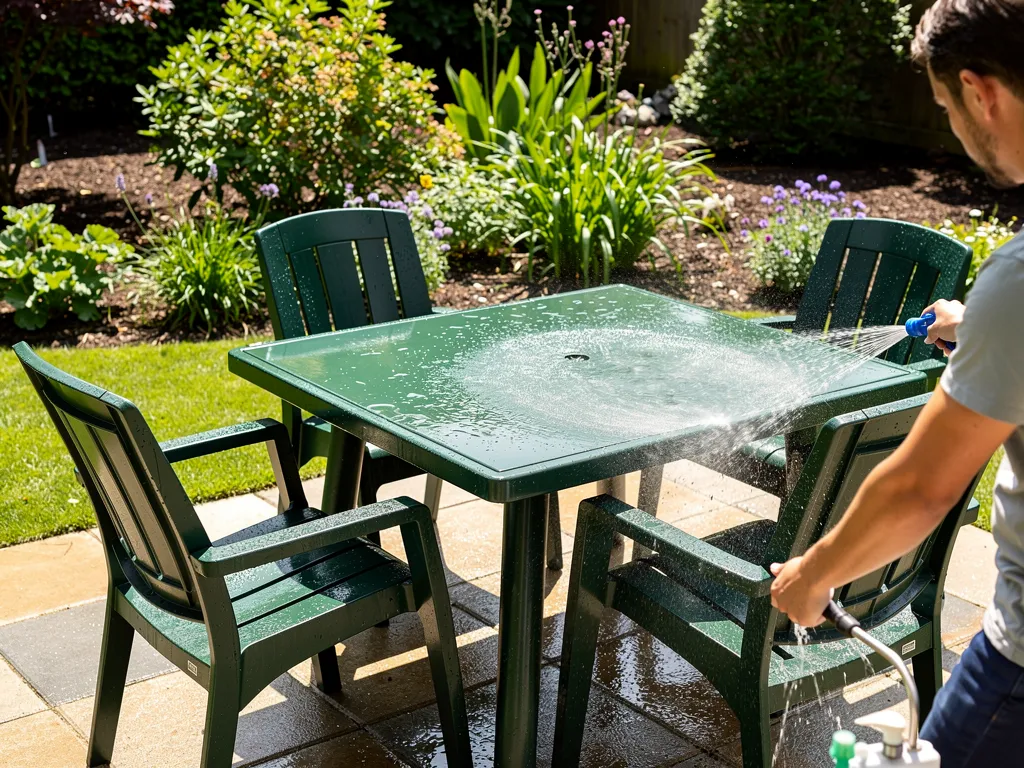
Rinse thoroughly with clean water and inspect the treated areas. Repeat the vinegar or baking soda treatment if needed. Most stains and mildew patches will clear after one or two cycles.
Step 6: Dry Completely
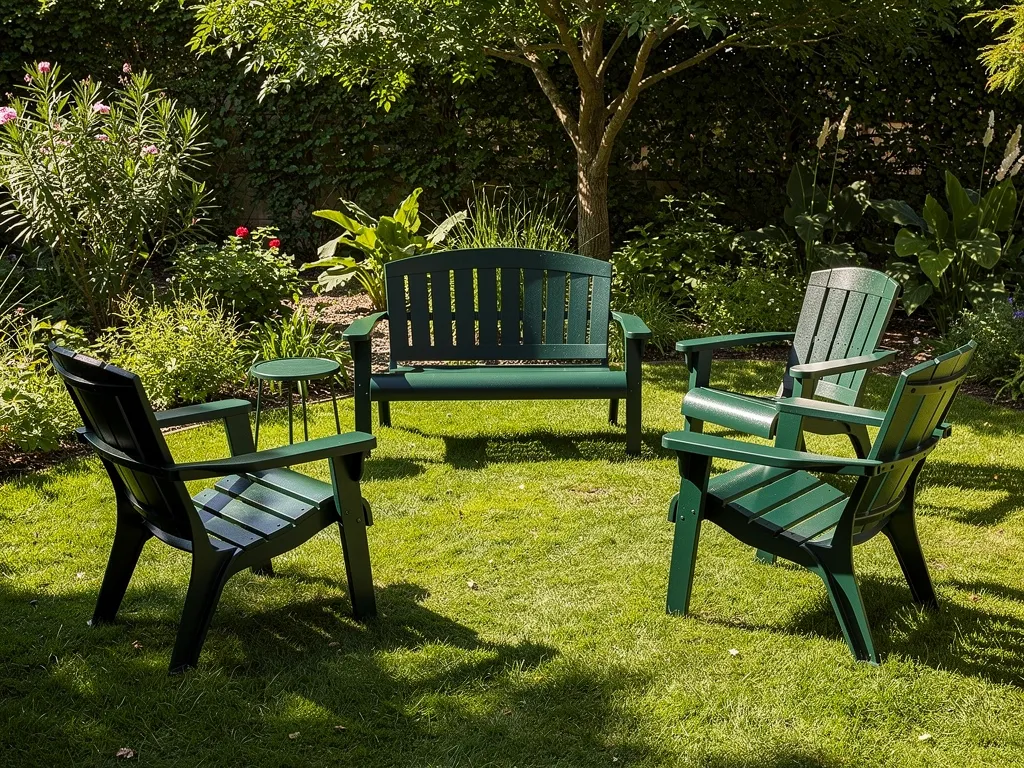
Allow the furniture to dry fully before returning cushions, covers, or accessories. If the furniture will be stored or covered, complete drying is essential to prevent mildew from re-establishing in enclosed spaces.
Safe vs. Avoid: Quick Reference
The best cleaner for poly furniture is one that is gentle enough not to damage the HDPE surface while still effective against dirt and organic growth. Use this table as a reference when choosing your cleaning products and tools.
| Product or Method | Safe to Use? | Notes |
|---|---|---|
| Mild dish soap + warm water | ✅ Yes | Best for routine cleaning |
| White vinegar solution | ✅ Yes | Effective for mildew and algae |
| Baking soda paste | ✅ Yes | Safe mild abrasive for tough stains |
| Commercial HDPE cleaner | ✅ Yes | Follow product instructions |
| Soft-bristle brush | ✅ Yes | Essential for grooves and textured surfaces |
| Microfiber cloths | ✅ Yes | Ideal for wiping and drying |
| Bleach | ❌ No | Can discolor and degrade HDPE over time |
| Abrasive scrubbers / steel wool | ❌ No | Will scratch the surface permanently |
| High-pressure washer | ❌ No | Can force water into joints and cause warping |
| Solvent-based cleaners | ❌ No | May strip color or damage the finish |
| Acetone / nail polish remover | ❌ No | Can dissolve or pit the HDPE surface |
Seasonal Poly Furniture Maintenance Tips
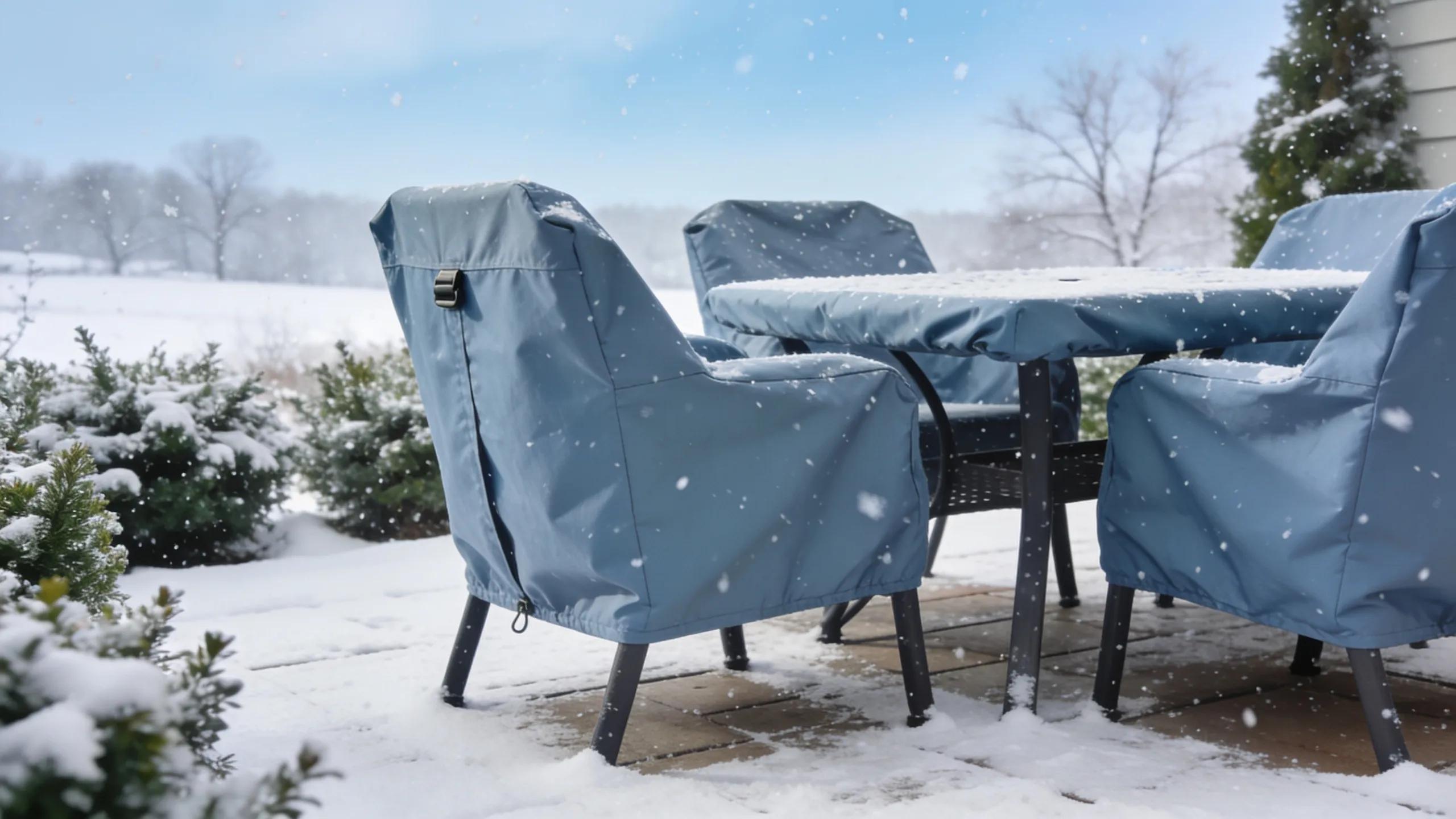
A consistent poly lumber care guide isn’t just about cleaning – it’s about protecting your furniture across the seasons. A few simple habits make a significant difference:
- Spring: Perform a thorough deep clean at the start of the season to remove winter grime and any mildew that developed in storage.
- Summer: Rinse furniture weekly if it is in heavy use. Wipe down surfaces after outdoor meals to prevent food debris from setting.
- Fall: Clean before storing or covering furniture for the winter. Ensure all surfaces are fully dry before placing covers.
- Winter: Store furniture in a covered area if possible. If leaving it outdoors, use breathable furniture covers – not plastic sheeting, which traps moisture and promotes mildew.
Frequently Asked Questions
How often should I clean poly outdoor furniture? For routine outdoor furniture cleaning tips, aim for a light wash every four to six weeks during active use. A deeper clean twice per season – once in spring and once before winter – is sufficient for most homeowners.
Can I use a pressure washer on poly lumber? It is not recommended. High-pressure water can force moisture into joints, loosen hardware, and potentially cause warping or damage to the finish over time. A garden hose on a standard setting paired with a soft-bristle brush delivers excellent results without the risk.
How do I remove mildew from poly furniture? A 50/50 white vinegar and water solution is the most effective and safest method. Spray it on, let it dwell for 5–10 minutes, scrub gently with a soft-bristle brush, and rinse thoroughly. For persistent mildew, repeat the treatment.
Is poly furniture truly low maintenance? Yes – poly outdoor furniture requires far less upkeep than wood alternatives. There is no staining, sealing, or painting required. Cleaning HDPE outdoor furniture involves only mild soap, water, and occasional targeted treatments for stains or mildew.
Will cleaning products fade or discolor my poly furniture? Gentle cleaners like dish soap, vinegar, and baking soda will not affect the color of poly lumber. Avoid bleach, solvents, and abrasive pads, which can dull or discolor the surface permanently.
Can I leave poly furniture outside year-round? Poly lumber is engineered to handle outdoor exposure, including UV rays, moisture, and temperature swings. However, using breathable covers during off-season months and performing seasonal deep cleans will extend the life and appearance of your furniture considerably.
Ready to Upgrade Your Outdoor Space?
If your current furniture demands more work than it’s worth, it may be time to explore a more durable, low-maintenance option. Timbercraft Poly’s Amish-crafted poly outdoor furniture is built to last decades with nothing more than the simple cleaning routine outlined in this guide.
Browse our full collection at timbercraftpoly.com or contact us directly:
- Phone: 319-530-9996
- Email: [email protected]
- Address: 1034 Hwy 1, Kalona, IA 52247
Why Schedule a Call?
Popular Insights
Amish Poly Furniture vs. Factory-Made Outdoor Furniture
Oct. 02, 2026
Poly Furniture Colors: How to Choose Your Perfect Palette
Oct. 01, 2026
How To Choose Outdoor Dining Table Size
Sep. 02, 2026
5 Things to Look for When Buying Poly Outdoor Furniture
Sep. 02, 2026How to Clean Poly Outdoor Furniture (Step-by-Step Guide)
Aug. 06, 2026Our Categories