0
Outdoor Furniture
Amish Poly Furniture vs. Factory-Made Outdoor Furniture
By Scott
October 2, 2026
Share:
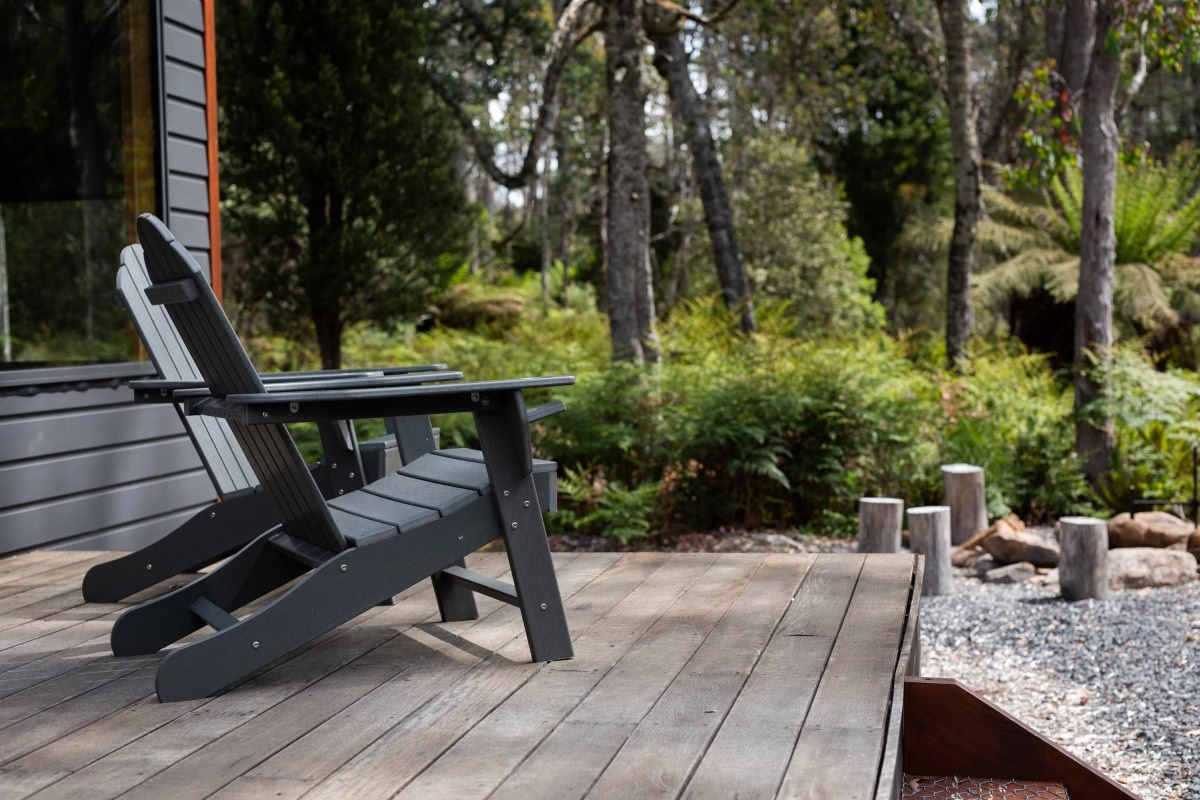
Two Adirondack chairs can look almost identical in a product photo. Same color, same silhouette, same “weatherproof” label in the description. But one was assembled in a batch of a few dozen by a small crew who checked each panel by hand, and the other rolled off a line that produces the same chair thousands of times a week with as little human inspection as the process allows. That difference does not show up in a thumbnail image. It shows up two winters later, when one chair’s seat panel has started to bow and the other hasn’t moved at all.
This is the real question behind “Amish poly furniture vs. factory-made outdoor furniture”: not which one is technically made of HDPE (both usually are), but which manufacturing process you’re actually paying for. Search for Amish made poly online and you’ll find dozens of listings using the phrase loosely. Very few explain what actually separates a small-batch, hand-inspected piece from one that came off a high-volume production line, which is exactly what this comparison sets out to do.
Quick Verdict
- Choose Amish-crafted poly if you want furniture that’s inspected piece by piece, built with denser panel infill, and backed by a manufacturer who stands behind their own joinery for years, not months.
- Choose factory-made poly if your budget is tight, you need furniture fast, and you’re comfortable replacing pieces every few years rather than owning them for decades.
- The real cost gap is smaller than it looks once you divide price by years of actual use. A $180 factory set replaced twice in ten years often costs more than one $650 Amish-built set that’s still in good shape at year ten.
Manufacturing Process: Small-Batch vs. Assembly Line
Every TimbercraftPoly piece is built in Kalona, Iowa, by Amish craftsmen working in small batches, often a handful of units at a time. That pace means a craftsman can catch a warped panel, a hairline crack in a fastener hole, or an uneven seam before it ever leaves the shop. It also means design changes and repairs are handled by the same people who built the piece in the first place, not a call center reading from a script.
Factory-made outdoor furniture, by contrast, is typically produced on injection-molding or extrusion lines designed to run continuously with minimal manual inspection. This isn’t automatically a sign of poor quality. Large-scale manufacturing has real advantages in consistency and price. But it does mean quality control happens at the sampling level (checking one unit out of every few hundred) rather than at the individual piece level. If a batch has a resin mixing problem, dozens of defective units can ship before anyone notices.
The pace difference also shows up in how repairs and custom requests get handled after the sale. A small Amish shop can swap a color, adjust a dimension, or rebuild a single damaged panel because the same people who cut the boards can revisit the piece later. A factory line built for volume usually isn’t set up to service one-off requests at all. You either accept the standard unit as shipped, or you’re on your own for parts and repairs.
Material Quality and HDPE Density
Both Amish-built and factory-made poly furniture are typically made from high-density polyethylene, often sourced from recycled milk jugs and detergent bottles. But “HDPE” on a spec sheet doesn’t tell you everything. Wall thickness and infill density vary significantly between manufacturers, and those differences determine how a chair holds up to years of sun, weight, and temperature swings.
Amish-built poly lumber generally uses thicker board profiles and denser infill because the manufacturing process isn’t optimized purely for material cost per unit. Lower-cost factory furniture sometimes uses thinner-walled or partially hollow poly components to hit a lower price point, which can lead to flexing or cracking sooner under heavy or repeated use, especially in colder climates where the material naturally becomes more rigid.
If you’re comparing two “poly furniture” listings side by side, ask for the board thickness in inches, not just the material name. A vague answer is itself useful information. It’s also worth asking whether the color runs all the way through the board or is only a surface coating, since a solid, through-colored board resists scratches and sun fading far better than a piece that’s colored on the outside only.
Joinery, Hardware, and Build Quality
This is where the two approaches diverge the most, and where the difference is easiest to feel with your own hands. Amish-crafted poly furniture is typically assembled with stainless steel hardware, hand-tightened and checked at final assembly, using joinery techniques (like reinforced corner blocks) that a craftsman can adjust piece by piece if something doesn’t sit flush.
Mass-produced factory furniture more commonly uses zinc-plated or coated fasteners to control cost, which can corrode and stain the surrounding poly lumber after repeated exposure to rain and humidity, particularly in the Midwest’s freeze-thaw winters. Joinery on assembly-line furniture is also built to a single tolerance spec across the entire run. There’s no craftsman on the floor deciding a panel needs an extra screw because it’s sitting slightly off.
None of this means every factory piece is poorly built. It means the person building it has less latitude to fix a problem on the spot, because the whole point of the line is that every unit is handled identically.
Warranty and Expected Lifespan
Warranty length is one of the most honest signals a manufacturer can give you, because it reflects how much confidence they actually have in their own material and joinery. Many mass-market outdoor furniture brands offer warranties in the one-to-three-year range, often covering only frame cracking and excluding fading, hardware corrosion, or seat panel warping entirely.
Amish-built poly manufacturers, including TimbercraftPoly, tend to offer meaningfully longer coverage, because a craftsman who personally assembled a piece has more confidence standing behind it than a factory covering a batch it never individually inspected. Ask any brand you’re considering two direct questions: what specifically is covered, and what specifically is excluded. The answer tells you more than the marketing copy around it.
Price Per Year of Use, Not Just Sticker Price
Sticker price is the easiest number to compare and the least useful one. A factory-made two-seat glider might run $150 to $250. A comparable Amish-crafted glider might run $500 to $700. On price alone, factory-made wins every time.
But outdoor furniture isn’t a one-time purchase, it’s a multi-year asset sitting outside in real weather. If a $200 factory glider needs replacing every three to four years due to cracking, fading, or hardware failure, that’s $400 to $600 spent over a decade, plus the time cost of researching and reordering each time. A $600 Amish-built glider that’s still solid after ten years works out to roughly $60 a year, with no replacement research required. The cheaper-looking option isn’t always the cheaper one.
Comparison at a Glance
| Factor | Amish-Crafted Poly | Factory-Made Poly |
|---|---|---|
| Production method | Small-batch, hand-inspected piece by piece | Continuous assembly line, sample-inspected |
| Board thickness | Typically thicker, denser infill | Often thinner or partially hollow to control cost |
| Hardware | Stainless steel, hand-checked at assembly | Often zinc-plated, prone to corrosion over time |
| Typical warranty | Multi-year, often covers hardware and structure | 1 to 3 years, frame cracking only in many cases |
| Upfront price | Higher | Lower |
| Cost per year of use | Often lower over a decade | Often higher due to replacement cycles |
Who Should Choose Which
Factory-made outdoor furniture makes sense for renters, short-term staging situations, or anyone furnishing a space they don’t expect to keep for more than a few years. It also makes sense if the upfront budget genuinely isn’t there. There’s no shame in that trade-off, it’s a real and valid one.
Amish-crafted poly furniture makes more sense for homeowners, retirees, and lake or vacation property owners who plan to keep their outdoor space set up for years, not seasons. This is especially true for anyone shopping for Amish composite lawn furniture meant to stay outside year-round rather than get stored away each winter. If you’ve already replaced one or two rounds of cheap outdoor furniture and you’re tired of doing it again, that pattern itself is usually the strongest signal that a longer-lasting, small-batch piece will save both money and hassle over time.
Is “Amish-Crafted” Just a Premium Label?
It’s a fair question, and one worth asking of any brand that leans on a craftsmanship story. The honest answer is that “Amish-built” only means something if you can verify it. Ask where the furniture is actually assembled, whether the company can name the shop or region (Kalona, Iowa, in TimbercraftPoly’s case), and whether hardware and board thickness specs are disclosed rather than vague. A brand that answers those questions specifically is telling you something real. A brand that only offers lifestyle photography and no verifiable detail is asking you to take the label on faith.
This is also why <a href=”https://timbercraftpoly.com/237/what-is-poly-furniture-and-why-is-it-more-durable-than-wood”>understanding what actually makes poly furniture durable</a> matters more than the marketing term attached to it. Durability comes from board density, joinery, and hardware choices, not from a label alone, even a truthful one.
Final Verdict
If you’re comparing amish composite outdoor furniture against a mass-market alternative purely on sticker price, factory-made will usually win. But if you compare the two the way you’d compare any long-term purchase, on cost per year, on what the warranty actually covers, and on how the piece holds up through a Midwest winter, small-batch Amish craftsmanship tends to come out ahead for anyone planning to keep their outdoor furniture for more than a few seasons.
This same logic applies whether you’re comparing <a href=”https://timbercraftpoly.com/poly-furniture/poly-furniture-vs-wood-furniture”>poly furniture against traditional wood</a> or weighing it against <a href=”https://timbercraftpoly.com/poly-furniture/poly-furniture-vs-teak-which-outdoor-material-actually-lasts-longer”>teak and other premium outdoor materials</a>: the manufacturing process behind a piece usually matters more than the material name printed on the listing.
If you want to see the difference in person rather than take a brand’s word for it, start with something like our Classic Adirondack Chair, a piece that shows Amish joinery clearly at every seam, or browse our full poly chair collection and poly table sets to compare board thickness and hardware for yourself. You can also read more about how our Amish-built dining furniture is assembled, or learn more about the craftsmen behind every piece we build. If you have questions about a specific piece before you buy, our team is happy to walk through the specs with you directly, just reach out through our contact page.FAQs
Is all poly furniture made the same way?
No. “Poly furniture” describes the material (recycled HDPE), not the manufacturing process. Two products both labeled poly furniture can differ significantly in board thickness, hardware quality, and how closely each piece is inspected before it ships.
Does Amish-built poly furniture cost more than factory-made poly furniture?
Usually, yes, upfront. Small-batch production with hand inspection and denser materials costs more to produce than continuous assembly-line manufacturing. The gap narrows or reverses when you calculate cost per year of actual use rather than sticker price alone.
How can I tell if outdoor furniture is genuinely Amish-built or just marketed that way?
Ask the manufacturer to name the specific shop or region where it’s built, and ask for concrete specs like board thickness and hardware material. A brand with nothing to hide will answer both questions directly.
Is factory-made poly furniture bad quality?
Not necessarily. It’s a different trade-off, not automatically inferior. It typically favors lower cost and faster availability over the denser materials, hand inspection, and longer warranties that come with small-batch craftsmanship.
What should I check before buying either type of poly furniture?
Board thickness, hardware material (stainless steel vs. zinc-plated), and exactly what the warranty covers and excludes. These three details tell you more about long-term durability than the brand’s marketing language.
Why Schedule a Call?
Popular Insights
Amish Poly Furniture vs. Factory-Made Outdoor Furniture
Oct. 02, 2026
Poly Furniture Colors: How to Choose Your Perfect Palette
Oct. 01, 2026
How To Choose Outdoor Dining Table Size
Sep. 02, 2026
5 Things to Look for When Buying Poly Outdoor Furniture
Sep. 02, 2026
How to Clean Poly Outdoor Furniture (Step-by-Step Guide)
Aug. 06, 2026Our Categories