0
Poly Furniture
Poly Furniture Colors: How to Choose Your Perfect Palette
By Scott
October 1, 2026
Share:
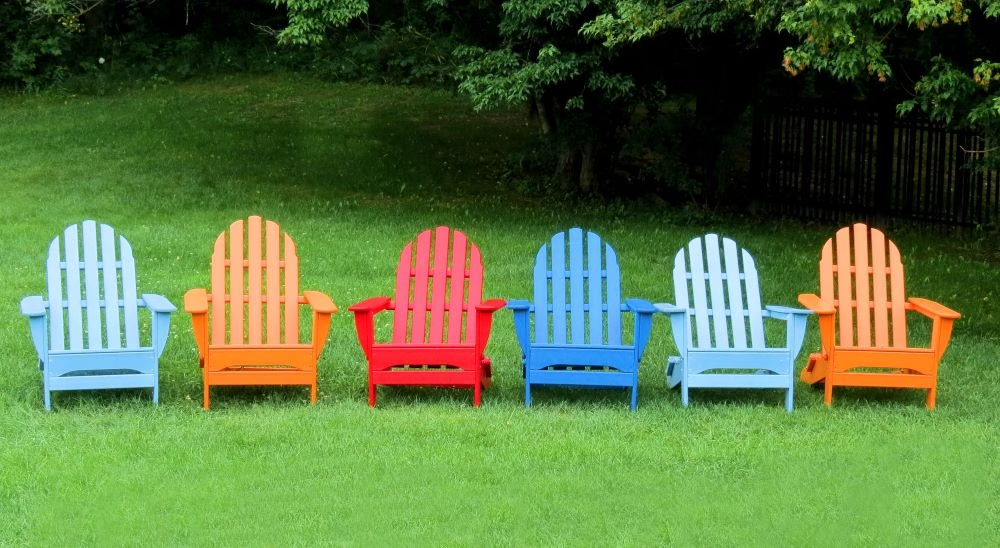
Picking out new outdoor furniture is the easy part. Picking the right color is where most people get stuck, staring at a rack of poly lumber samples and wondering if that deep green will actually look right against their siding once it’s sitting on the patio at home. It is a common enough sticking point that plenty of shoppers end up defaulting to whatever color happens to be in stock, then wishing they had thought it through once the furniture arrives.
The good news: choosing a poly furniture color does not have to be a guessing game. Start with your home’s existing exterior colors, then narrow your options by climate, patio surface, and how long you plan to keep the furniture. Because poly lumber holds its color for 25 or more years without fading, cracking, or needing a repaint, the choice you make now is one you will be living with for decades, so it is worth a few extra minutes to get it right.
This matters more for poly furniture than for traditional wood or painted patio sets. A painted wood chair can be sanded down and repainted if you change your mind in a few years. Poly furniture is built to outlast that kind of do-over, which is exactly the point of buying it, but it also means the color decision carries more weight up front than it would with furniture you expect to replace or refinish anyway.
What You’ll Need Before You Choose
Before you start browsing colors, gather a few things. This step takes ten minutes and saves you from an expensive do-over.
- A few photos of your patio, deck, or porch in natural daylight
- The paint or siding color name for your home’s exterior, if you know it
- A photo or swatch of your patio or deck surface (wood, stone, concrete, or composite)
- Any existing outdoor decor you plan to keep (planters, cushions, umbrellas)
- A rough idea of how long you expect to keep the furniture in this location
Step 1: Start With Your Home’s Exterior Colors
Your furniture does not need to match your house exactly, but it should not fight it either. Homes with warm exterior tones (red brick, tan siding, natural wood) generally pair well with poly furniture in white, black, brown, or a weathered wood tone. Homes with cooler exteriors (gray siding, blue-gray stone, white trim) tend to look sharper with white, black, or a soft gray poly finish. If your home has a neutral exterior, you have the most freedom, and that is a good spot to introduce a bolder accent color like green or blue.
Step 2: Factor In Your Climate and Sun Exposure
Darker colors absorb more heat, which matters if your patio gets direct afternoon sun for most of the day. A dark brown or black chair left in full sun can get noticeably warmer to the touch than a white or light gray one sitting in the same spot. If your outdoor space is mostly shaded, this matters less, and you can lean into darker tones without a second thought. Midwest homeowners dealing with hot summers and cold winters should also know that poly furniture color will not fade or chalk the way painted wood does after a few seasons of sun and snow, so the color you pick on day one is the color you will have years from now.
Step 3: Match or Contrast With Your Patio Surface
Look at the surface your furniture will actually sit on. A weathered gray composite deck can wash out a light gray chair, making the whole space feel flat, while that same gray chair might look great against a warm red-brick patio. As a simple rule: if your patio surface is a neutral tone (gray concrete, tan pavers, natural wood decking), you have room to use a stronger accent color for your furniture. If your patio surface already has a strong color or pattern, a neutral furniture color like white or black usually reads cleaner.
Step 4: Think Past This Season
This is the step people skip, and it is the one that matters most with poly furniture. Because these pieces are built to last 25 or more years with zero maintenance, you are not just picking a color for this summer’s cushions and this year’s trends. Ask yourself if you would still like this color if you repainted your house in five years, or if you sell the home and the next owner has a completely different style. Neutral tones (white, black, brown) tend to hold up best over decades of changing trends, while bold accent colors are worth reserving for smaller pieces like an accent table or a single glider rather than an entire dining set.
This is especially worth thinking through for two kinds of buyers. Retirees furnishing a forever patio for zero-maintenance living tend to be happiest with a neutral choice they will not tire of, since the whole appeal of poly furniture is not having to think about it again for decades. Lake house and vacation property owners face the opposite consideration: a second home often sees more varied use and a wider range of guests and renters over the years, so a slightly bolder or more seasonal color can make sense there in a way it might not for a primary residence.
Step 5: Order a Sample Before You Commit
Color on a screen never looks quite the same as color on your patio. If you are ordering a full table set, a bench, or anything you plan to keep for years, ask about a physical color sample first, or place a smaller single-item order like an end table before committing to a full outdoor dining set . Set it outside in the actual spot where the furniture will live for a day or two, and look at it in both morning and evening light before making your final call.
Quick Reference: What Pairs Well With What
| Your Home’s Exterior | Furniture Colors That Work | Colors to Use Sparingly |
|---|---|---|
| Warm tones (red brick, tan siding, natural wood) | White, black, brown, weathered wood | Cool blues, bright whites in full sun |
| Cool tones (gray siding, blue-gray stone) | White, black, soft gray | Warm browns, orange-leaning tones |
| Neutral or beige exterior | Almost anything, including bold accents | N/A, this is your most flexible pairing |
| Busy or patterned patio surface | White, black, other neutrals | A furniture color that competes with the pattern |
Bringing It All Together
None of these steps are complicated on their own, but skipping them is how people end up with furniture that looked great in a photo and feels off once it is actually sitting on their patio. Start with your home’s exterior, check it against your climate and patio surface, and remember that whatever color you choose today is the color you will have for a long time to come.
If you are shopping for a full outdoor living space rather than a single piece, it helps to look at color across your whole furniture plan at once, from poly Adirondack chairs to matching benches and a porch swing . We cover more on furnishing a second home in our upcoming guide to choosing furniture sets for lake houses and vacation properties (once published), and if you are still comparing product types altogether, our upcoming full poly furniture comparison across chairs, tables, benches, and swings (once published) covers how color and style choices differ by category.
Frequently Asked Questions
Do poly furniture colors fade over time?
No. Poly lumber color runs all the way through the material rather than sitting on top as a coating, so it will not peel, chip, or fade the way painted wood furniture does. You can expect the color you order today to look essentially the same after years of sun, rain, and snow.
Can I mix different poly furniture colors in the same outdoor space?
Yes, as long as you keep one color as the dominant tone. A common approach is choosing one neutral color (white, black, or brown) for larger pieces like a dining set or bench, then using a second accent color on a smaller piece like a single glider or an end table.
What is the most popular poly furniture color?
Neutral tones like white, black, and brown tend to be the most requested across most outdoor furniture brands, largely because they pair with the widest range of home exteriors and patio surfaces and age well as trends shift. That said, the right color for you depends on your specific home and space, not just what is popular.
Should I match my furniture color to my cushions and decor, or choose the furniture color first?
Choose the furniture color first. Poly furniture is the 25-year investment in this equation, while cushions, throw pillows, and planters are easy and inexpensive to swap out whenever you want a refresh. Pick a poly furniture color you will be happy with long-term, then treat the soft furnishings as the part of your outdoor space you update every few seasons.
Why Schedule a Call?
Popular Insights
Amish Poly Furniture vs. Factory-Made Outdoor Furniture
Oct. 02, 2026Poly Furniture Colors: How to Choose Your Perfect Palette
Oct. 01, 2026
How To Choose Outdoor Dining Table Size
Sep. 02, 2026
5 Things to Look for When Buying Poly Outdoor Furniture
Sep. 02, 2026
How to Clean Poly Outdoor Furniture (Step-by-Step Guide)
Aug. 06, 2026Our Categories